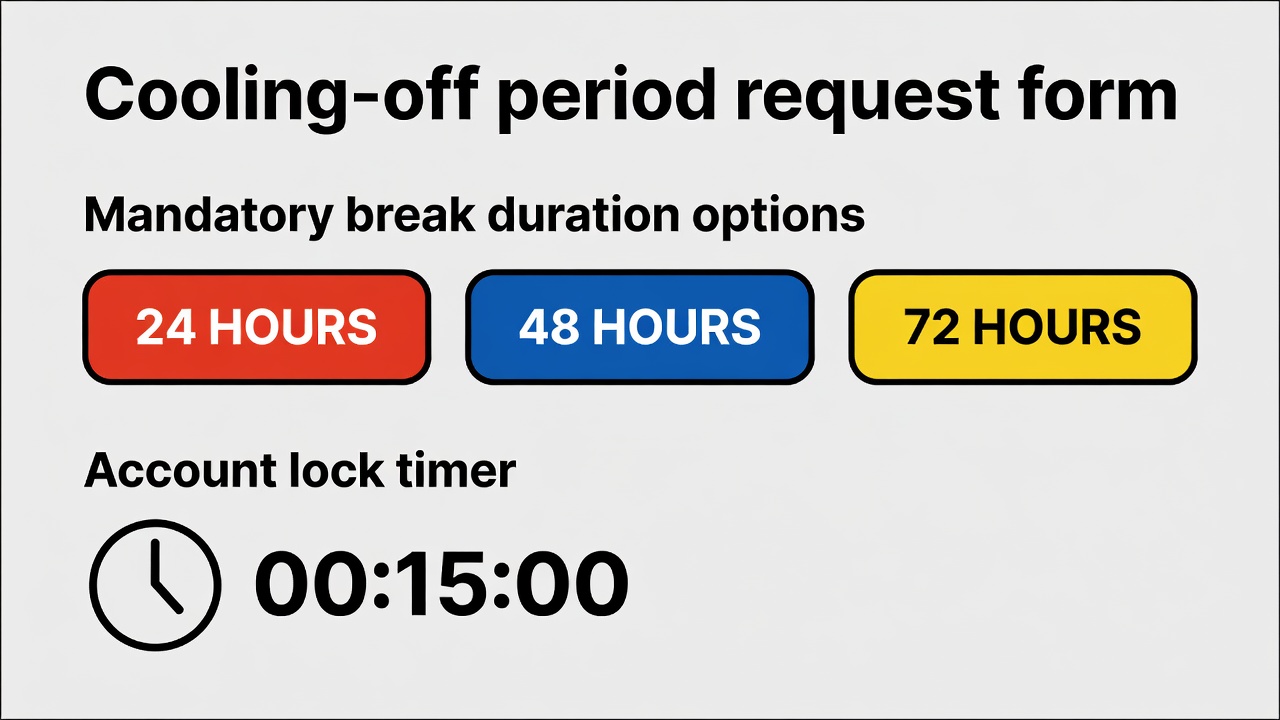
A cooling-off period is a self-imposed timeout from gambling. The player requests one. The casino enforces it. For the duration (usually 24 hours to one month), the account is locked.
This is loss aversion at work. You've been losing. You know you should stop. Willpower alone isn't enough. You need a commitment device.
A cooling-off period is that device. It's the precommitment you make in a moment of clarity. When the urge to gamble returns, the mechanism stops you.
The Psychology
Hyperbolic discounting explains why this works. You discount the future heavily. In the moment, gambling feels urgent. A cooling-off period forces you to commit to the future-you's preference, which is to not gamble.
This is different from willpower. Willpower is active resistance. A cooling-off period is external restraint. You can't overcome external restraint as easily.
The Duration
Most casinos offer options: 24 hours, 7 days, 30 days, 90 days. Some allow custom durations.
Research on gambling addiction shows that 30 days is sufficient to break most urges. The first week is hardest (withdrawal-like symptoms). By day 14, cravings typically decline. By day 30, many people have fully disconnected.
The Enforcement
Licensed casinos under UKGC are required to offer cooling-off periods. The account is genuinely locked. You cannot log in, you cannot withdraw funds, you cannot place bets.
Some casinos allow emergency withdrawal during a cooling-off period if you're in genuine financial hardship. But you have to call and justify it.
This friction prevents impulsive withdrawal. By the time you've waited through hold music and justified your position, the urgency has passed.
The Data
Studies on self-exclusion (a stronger version of cooling-off) show it reduces harmful gambling by 40 to 60 percent for the duration and for six months after.
Cooling-off periods are less intensive but show similar effects. Players who use them report reduced urges and clearer thinking after the period ends.
The Implementation
To activate a cooling-off period, log into your account, navigate to Responsible Gambling settings, and request it.
The casino's system typically offers a dropdown: select your duration, confirm, done.
You should receive a confirmation email. Check your email to verify the cooling-off is active.
The Limitations
Cooling-off periods only work if you use them before you're desperate. If you're already in crisis (losing rent money), a cooling-off period isn't enough.
Also, you can access other casinos. A cooling-off at DraftKings doesn't lock you out of Bet365. So you need to either self-exclude everywhere or rely on willpower across multiple sites.
Self-Exclusion (The Stronger Option)
Self-exclusion is permanent or semi-permanent (typically one to five years). It's stronger than cooling-off. Your account is deleted. You're barred from re-accessing the site.
Self-exclusion is for people who recognize they have a serious problem. It's the commitment device for behavioral addiction.
Cooling-off is for people who recognize they're in a temporary bad state and need space to recover.
The Recommendation
If you notice you're gambling more than intended, use a cooling-off period. It's not weakness. It's good judgment. You're using a tool designed to help you.
If you're unable to stick to a cooling-off period (you break it early), you probably need self-exclusion or professional help.