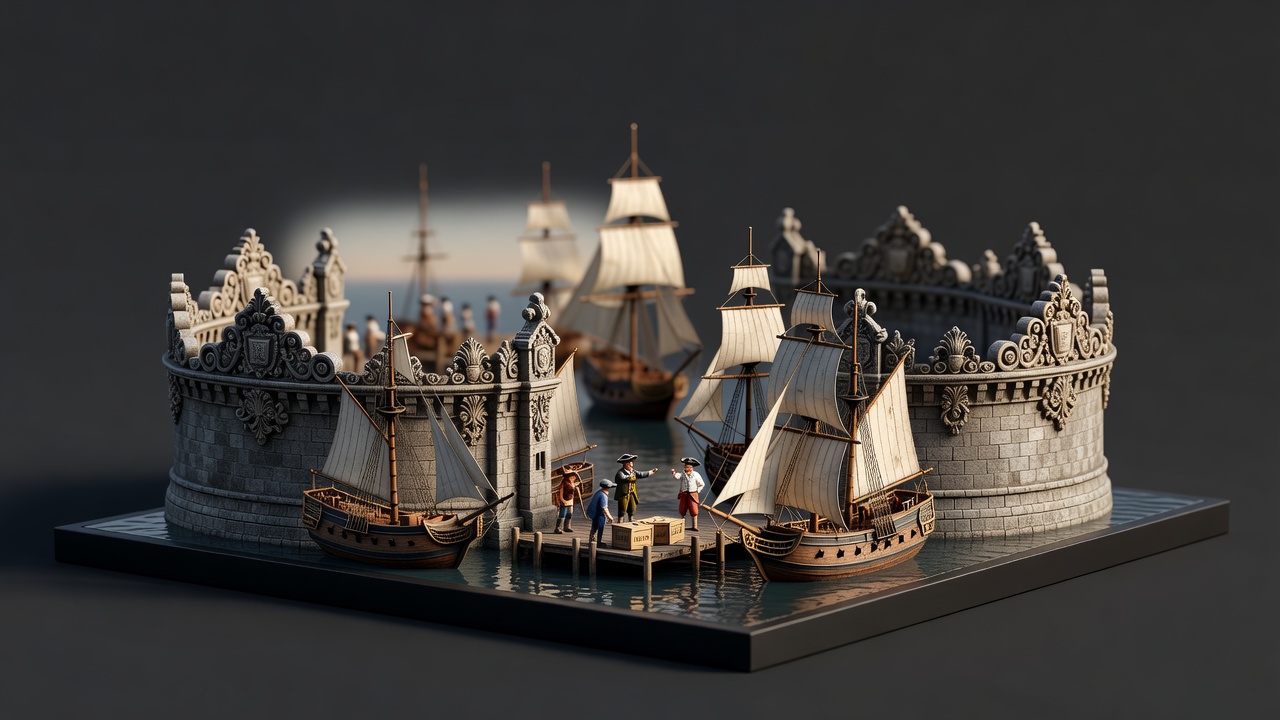
The Portuguese arrived in Macau in the 16th century. They called it the "City of Saints" because they were Catholic and the city was new. What they actually established was the first European foothold in East Asia. The Portuguese stayed. Other European powers tried to establish themselves and largely failed. By the 1700s, Macau was Portuguese territory operating under Portuguese law, Portuguese money, and Portuguese indifference.
Nothing much happened for three hundred years. Macau was a backwater. A place where Portuguese traders lived, spoke Portuguese, established churches, and pretended that the rest of Asia did not exist.
Then, in 1962, Stanley Ho obtained a gambling concession from the Portuguese colonial government. He opened a casino. The city, it turned out, had been waiting for this.
The Awakening
Macau did not develop into a gambling destination because the geography was optimal or the climate was favorable. Macau developed into a gambling destination because it was the only legal place for Chinese people to gamble.
Chinese people have a cultural affinity for wagering. The games that would eventually define Macau (baccarat, sic bo, pai gow) emerged from centuries of Chinese gambling culture. But mainland China prohibited gambling. Hong Kong was British and restrictive. Singapore was (and is) restrictive. Macau was Portuguese and permissive.
Therefore, Macau became the valve through which Chinese desire to gamble flowed. Men would ferry from Hong Kong across the water for a night at the casino. Men would travel from Shanghai and Beijing, take a calculated risk that authorities would not punish them, and wager money that represented months of salary.
The Boom
Through the 1970s and 1980s, Macau's casino revenue grew at 15-20 percent annually. The growth was not steady; it had rhythms. When mainland China's economy boomed and new wealthy emerged, Macau's revenues boomed. When the Chinese economy contracted, Macau's revenues contracted.
But the general trend was toward concentration. Money flowed into Macau because Macau was the only choice. The Portuguese colonial government collected taxes. Stanley Ho collected rents. The city built hotels and casinos.
By 1999, when Portugal handed Macau back to China under the "One Country, Two Systems" arrangement, Macau had transformed from a fishing village into the world's third-largest gaming center.
The Handover Moment
When China took control in 1999, a question emerged: would gambling be permitted to continue? China had prohibited gambling on the mainland. Would they prohibit it in Macau too?
China chose not to. They recognized that gambling in Macau was economically valuable and geographically contained. By permitting continued gambling, they allowed the city to remain a destination for wagers without extending that permission to the mainland.
This was clever. It created a safety valve. Chinese wealth could flow into Macau, be wagered, and either flow back into Chinese pockets or be taxed by the Macau government.
The Expansion
With Chinese government approval and encouragement, Macau's gaming industry exploded. Stanley Ho's forty-year monopoly was broken in 2002. Las Vegas-based casino operators arrived. The industry became competitive. New casinos were constructed at a frenetic pace.
By 2013, Macau's gaming revenues exceeded those of Las Vegas. The world's largest gambling market was no longer Las Vegas; it was a former Portuguese fishing colony of 600,000 people.
The Present
Macau remains the world's largest gaming center by revenue. Most revenue comes from baccarat, a card game that the Chinese love and that Europeans and Americans find slow and boring.
VISIT patterns show that Macau's customer base is almost exclusively Chinese. The city has little appeal to Western tourists; the culture is Chinese; the games are configured for Chinese preferences; the VIP suites are designed for Chinese businessmen.
The COVID-19 pandemic severely impacted Macau because it closed the border with mainland China. Gaming revenues dropped 80 percent. They are recovering, but slowly. Macau's entire economic structure is dependent on the ability of mainland Chinese to cross the border and wager.
What It Reveals
Macau's history reveals that gambling follows opportunity, not planning. No one designed Macau to be a global gambling center. Stanley Ho saw a market opportunity and built casinos. The market responded. Fifty years later, a fishing village had become an economic powerhouse.
The city's dependence on a single market (mainland China) and a single activity (gambling) makes it economically fragile. But the opportunity cost of maintaining that dependence is enormous, so China permits it.
For someone interested in how markets develop and how geography shapes economies, Macau is instructive. Sometimes the unexpected city becomes the world center of whatever activity you are studying.