I used to think studying poker meant playing poker. I was wrong. The table teaches you something, but it teaches you fast and it teaches you wrong. The table teaches fear and hope and variance. That is not the same as teaching poker.
When I got serious about the game, serious like my life depended on it (and at the time I thought it did), I started spending four hours every evening away from cards. Just me and a spreadsheet and GTO Wizard or Equilab. This was years into my problem, so it felt like recovery. It was. It was also work that matters.
Hand History Analysis
I would export hands from my online sessions. Hundreds of them. I would pick the spots where I lost the most money. A hand where I made a 3-bet on the button and faced a 4-bet from the big blind. What did I do? I called. The flop came with two queens and a six. I checked. He bet. I called again. The turn was an ace. I folded.
Marginal spot. I lost maybe forty dollars on this one hand. But it represented a pattern. I was making weak 3-bets on the button and folding to aggression. Over two weeks, that pattern cost me thousands.
So I studied it. I played it through GTO Wizard. I looked at what my range actually was versus what I thought it was. The gap between intention and reality was catastrophic. I would have rather not known, but knowing changed everything. For the next month, I tightened my button opening range. I made fewer weak 3-bets. The bleeding stopped.
Position and Ranges
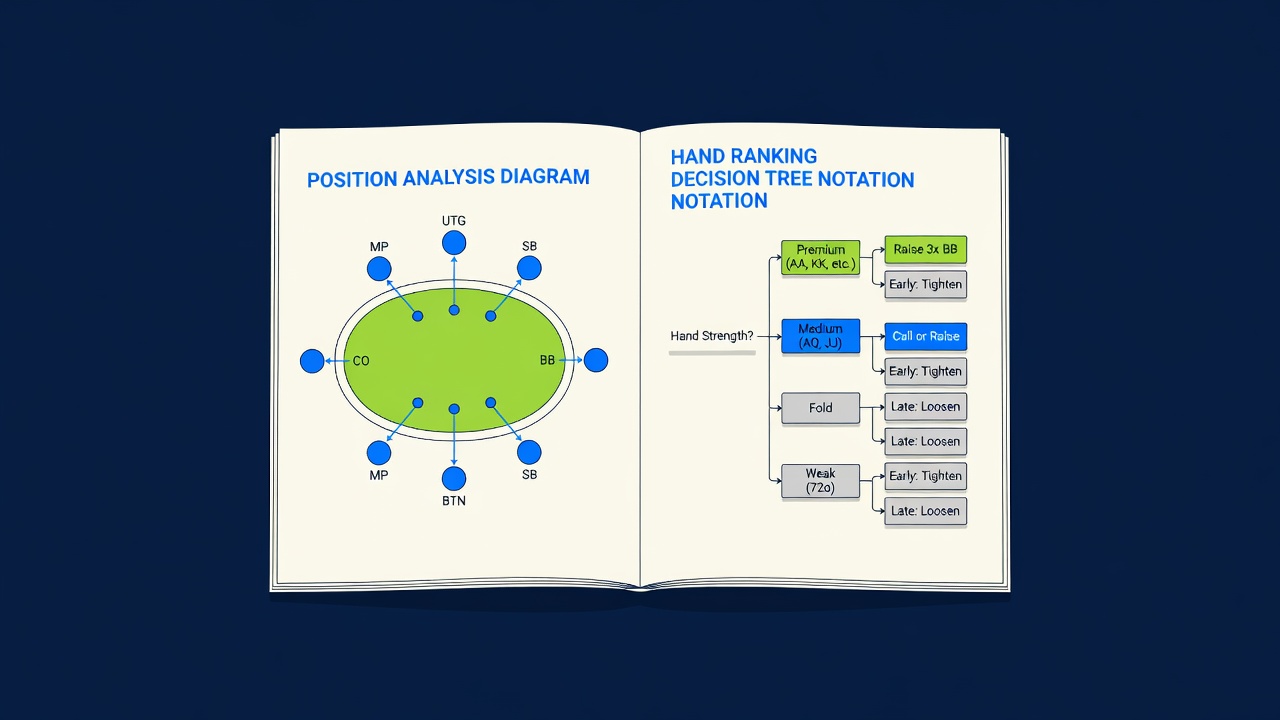
The theoretical work was clean. No emotional weight. Early position, you open 15% of hands. Late position, 40%. These are not rules. These are frameworks built on math. The beauty is that the math does not care how you feel about it.
I spent three weeks just understanding position ranges. Not memorizing them. Understanding them. Why does your cutoff range differ from your button range? Because the button has better position postflop. You can fold less because you get to act last. That small difference compounds across every decision tree.
When I played, I had this framework embedded. I did not think about it. I just lived inside it. That is what studying away from the table does. It becomes your skeleton. The table becomes your skin and nerves.
Spot-Specific Study
Some hands are worth more time than others. 3-bet pots. Blind-versus-blind. Defending your big blind from the button. These spots occur hundreds of times in a session. A small edge in these spots becomes enormous money over time.
I created a document. Six scenarios. Six decision trees. Each one had me playing against two different opponent types. I would work through the math. What hands do I defend in this spot against an aggressor? What hands do I fold? What about a balanced play?
After three months, I could play these spots in my sleep. The study had worked itself into my hands. When faced with a real decision in a real spot, the answer was already there. I was not thinking. I was executing.
Video Analysis
Pokemon coaching videos helped. Especially the content from coaches like Brad Wilson or Doug Polk. Not because they told me what to do, but because they explained why. I would pause every 30 seconds and think about the spot myself before they revealed their reasoning.
This took forever. A 20-minute video took me three hours to work through. But the time invested was honest. I was not passively consuming. I was actively questioning and testing my own logic against their logic.
The Difference It Made
I started playing again after three months of this study. The difference was structural. I played fewer hands. I played them better. My edges were clearer. My losses felt less random because they usually were not random. They were the cost of gathering information.
I went from losing 15 big blinds per hour to winning 2 big blinds per hour over a large sample. That shift came from work done away from the table, in a quiet room, with nothing at stake.
Years later, when I stopped gambling entirely, this was the part I missed least. The games were fine. The money was not worth it. But the studying, the theoretical work, the pure problem-solving, that part I still think about.