There is something honest about Speed Baccarat that slower games lack. The traditional version, played in real casinos with careful squeezing of cards, draws out the drama. You wait thirty seconds for a banker's hand. You watch the card come. That delay, that ceremony, that is part of the product you are purchasing. It is not just a game; it is a ritual.
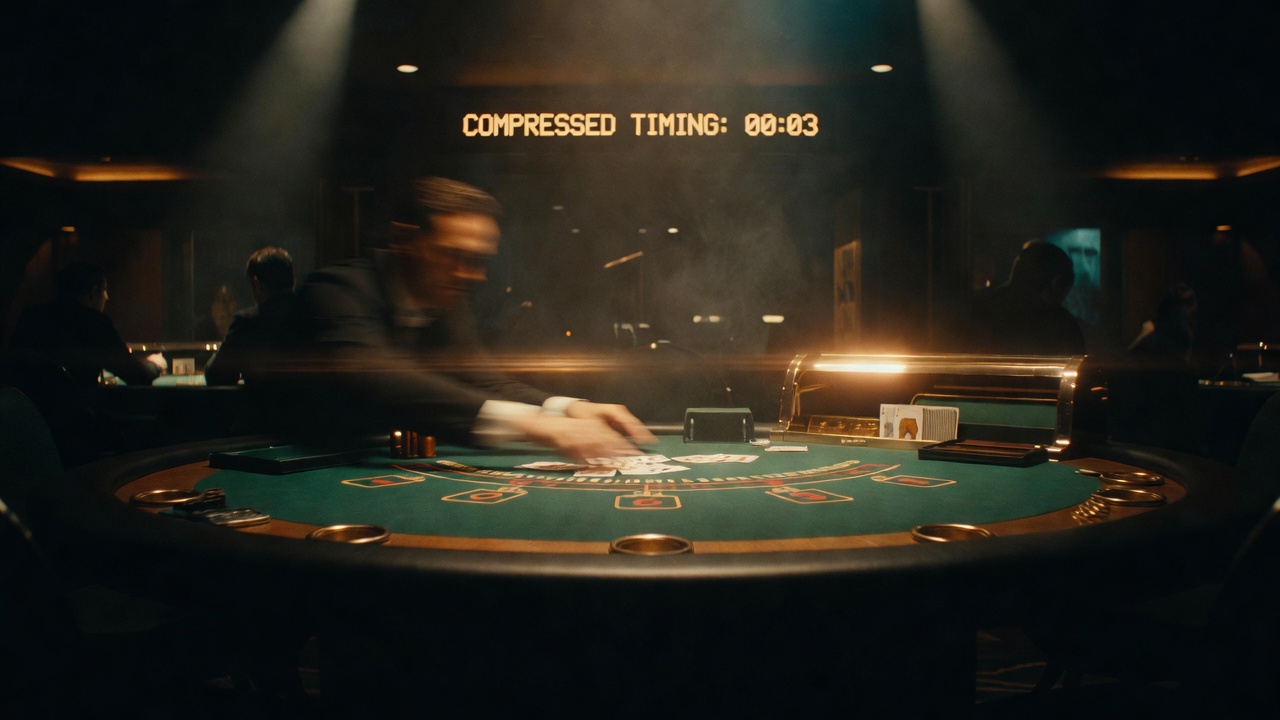
Speed Baccarat strips that away. Twenty-four seconds from wager to result. You place your bet, the dealer burns a card, deals two cards face-down to each position, reveals them, and either you have won or you have not. The math is identical to traditional baccarat. The house edge stays exactly where it was.
What You're Actually Buying
But the experience you are buying has changed fundamentally. When I buy a lottery ticket for two dollars, I am not buying a one-in-292-million chance at three hundred million dollars. That calculation is insane. What I am buying is forty-eight hours of daydreaming. I am buying permission to imagine a life. The ticket itself is nearly free; the daydream is the product.
Speed Baccarat asks you to compress that daydream down to twenty-four seconds. A hand ends, you place another wager, it ends again. You are on a cycle so tight that real reflection becomes impossible. You cannot daydream about the 100,000 dollar win because you are already placing the next bet. Speed, in this sense, is an economic mechanism. It sells you velocity instead of possibility.
Consider what happens at a traditional baccarat table in Macau. A whale sits down with 2 million dollars in chips. He plays conservatively, twenty hands per hour. Each hand, he has a moment to think, to smoke a cigarette, to feel the weight of the game. The ceremony matters to him. It reminds him he is doing something serious. Speed Baccarat offers no such ceremony.
The Bankroll Cost
Here is what matters: the house edge is 1.06 percent on banker bets, 1.24 percent on player bets. In traditional baccarat, that 1.06 percent acts on thirty hands per hour. You lose about 30 dollars per hour on a 100 dollar wager, assuming average play. In Speed Baccarat, you face approximately 150 hands per hour. The same 1.06 percent now acts five times as often. Your hourly loss rate quintuples.
You are not being cheated; the math has not changed. But the velocity has changed everything. The game has always been designed to extract value from you at a steady rate. Speed just accelerates the clock.
Why This Matters
There is an economic concept called loss aversion; people feel the pain of losses more acutely than the pleasure of equal gains. Speed Baccarat, by necessity, reduces your ability to process loss. By the time you have registered the last hand, you are already invested in the next one. The emotional brake is gone.
For professional recreational players, this might not matter. Someone with a 10,000 dollar bankroll and a ten-hour session limit can play Speed Baccarat and control their exposure through time and quantity discipline.
For everyone else, speed is the house's friend. It is a gift they give you, disguised as convenience. The cost is paid in velocity, compounded by the fact that you are making more decisions per hour than your brain can properly evaluate. Faster does not mean better. It means the outcome is decided faster, which is the only advantage the house ever needs.