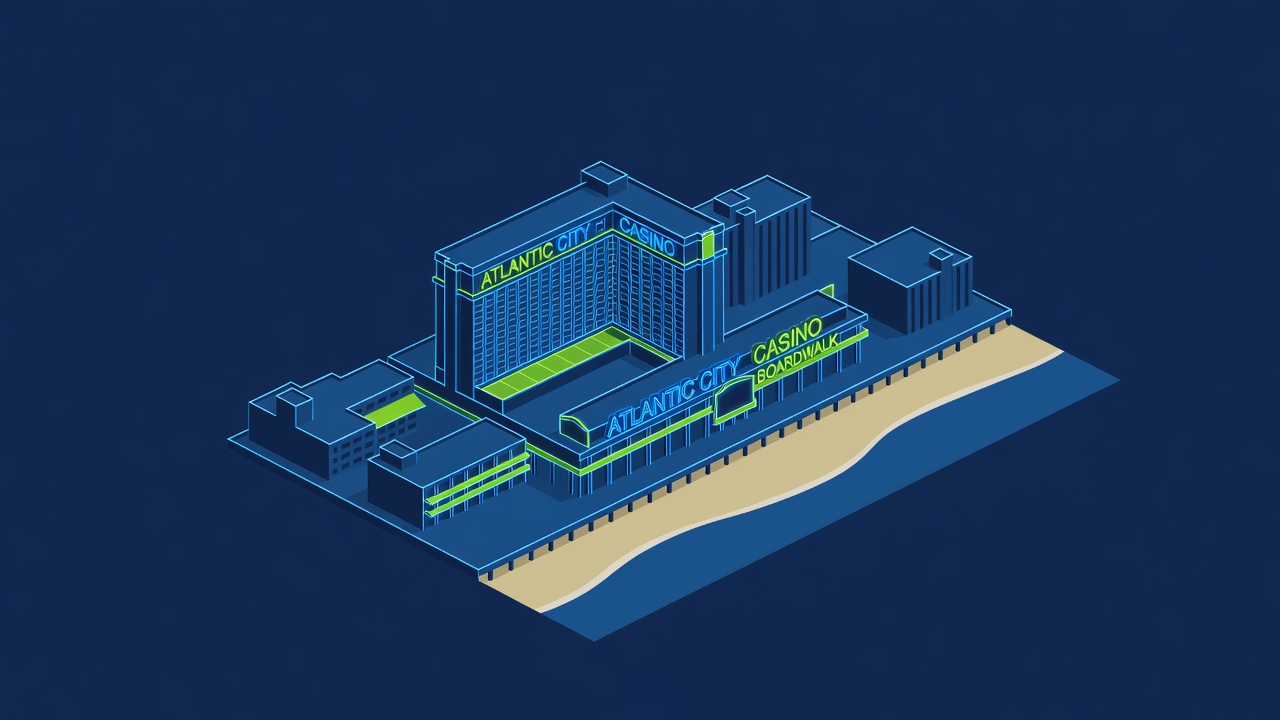
New Jersey voted to legalize casino gambling in 1976. Not Atlantic City specifically. New Jersey generally. The law had a clause that said if casinos ever opened, they had to be in Atlantic City. It was a compromise. Everyone wanted the money. Nobody wanted it in their town.
Atlantic City had been a resort destination. The Boardwalk was where you went for leisure. For fresh air. For dignity.
Then casinos came and the air got fresher (because money was in it), the leisure became intense, and dignity became optional.
Before Casinos
The Boardwalk was built in the 1870s. It was four miles long. Wooden. Hotels and arcades and saltwater taffy. Families vacationed there. It was a destination for wealthy people from Philadelphia and New York.
The Golden Age was the 1920s and 1930s. Capacity crowds in summer. Hotels filled. The Boardwalk was the thing to do.
Then air travel happened. People flew to Florida instead. The Boardwalk emptied out. By the 1970s, Atlantic City was deteriorating. Buildings were boarded up. The infrastructure was aging.
The city needed something. Casinos were the answer.
1978: The Resorts Opens
Resorts International opened in May 1978. It was massive. Immediately profitable. The first year's revenue was 224 million dollars. The state had legalized casinos to generate tax revenue. It worked.
More casinos followed. Bally's in 1979. The Borgata later. Each one was huge. Each one was profitable.
Within a decade, Atlantic City had nine casinos. Within 20 years, it had a dozen.
The Transformation
The Boardwalk changed completely. It became a casino corridor. Hotels were demolished and rebuilt. The character of the place shifted from "resort destination" to "gambling capital."
Money poured in. Tax revenue increased. Employment increased. Atlantic City became an economic engine.
But the Boardwalk itself wasn't for tourists anymore. It was for gamblers. The distinction matters. Tourists stroll. Gamblers go directly to the tables.
The Problem Nobody Saw Coming
Casinos make money because people lose money. The money that goes to the state in taxes comes from players' losses. Atlantic City's prosperity was built on the losses of millions of people.
As long as people kept losing, the system worked. Jobs were stable. Tax revenue was steady.
But Atlantic City became dependent on casino money. The city couldn't exist without it. Every dollar of tax revenue, every job, every piece of infrastructure was justified by casino gambling.
If gambling declined, the entire city declined. And it did decline.
The Decline
In 2008, the financial crisis hit. People had less money to spend. Casino revenue dropped. Casinos laid off employees. Tax revenue fell.
But there was another problem: online gambling. By 2012, New Jersey legalized online gaming. Players could gamble from home. Why go to Atlantic City?
Casino after casino closed. The Showboat closed. The Revel, opened in 2011, was bankrupt by 2014. The Atlantic Club closed.
By 2020, only six casinos remained in Atlantic City. The city's primary source of revenue was gone. The population had dropped to 37,000 (from a peak of 60,000). Unemployment was high.
The Boardwalk, once a destination for the new form of entertainment, was now half-empty.
The Present Situation
Atlantic City is in a strange state. Some casinos are profitable. The Borgata, the Bellagio of Atlantic City, still draws crowds. Bally's and the Ocean Casino make money.
But the city is not what it was. The Boardwalk is quieter. Many hotels are closed or converted to residential.
The city recently approved a new arena. It's supposed to attract events and diversify the economy. But that's been promised before.
The Lesson
Atlantic City's story is cautionary. A city that built itself entirely on gambling became fragile when gambling was available everywhere else.
The casinos were good for a 30-year period. From 1978 to 2008, they drove prosperity. Then the conditions changed. The city couldn't adapt because it had no plan B.
Las Vegas diversified. It has casinos, yes, but also shows, restaurants, conventions, and tourism infrastructure unrelated to gambling. If casino gambling declined in Vegas, the city would struggle, but it wouldn't collapse.
Atlantic City didn't diversify. It became the casino. When casino economics changed, Atlantic City became irrelevant.
The Boardwalk is still there. The wooden structure was replaced with concrete in 1998. Some hotels are still operating. But the energy is different.
Not sad, exactly. Just different. Like a party that was great until everyone left and nobody cleaned up.