In regulated sports betting jurisdictions, the starting pitcher in Major League Baseball represents the most significant variable affecting line movement. Therefore, operators and bettors must understand this relationship precisely.
The Mechanism
A baseball game features two opposing pitchers. Accordingly, bettors assess each pitcher's likelihood of producing a quality outcome for his team. The oddsmakers, in turn, price the matchup based on aggregate expected performance.
When a sportsbook opens a line, the moneyline reflects an estimated probability that the home team (or road team) will prevail. If the home team pitcher carries a 0.620 expected win probability and the road pitcher carries a 0.580, the implied probability favors the home team. The book will set odds accordingly, typically allocating a small margin for the house.
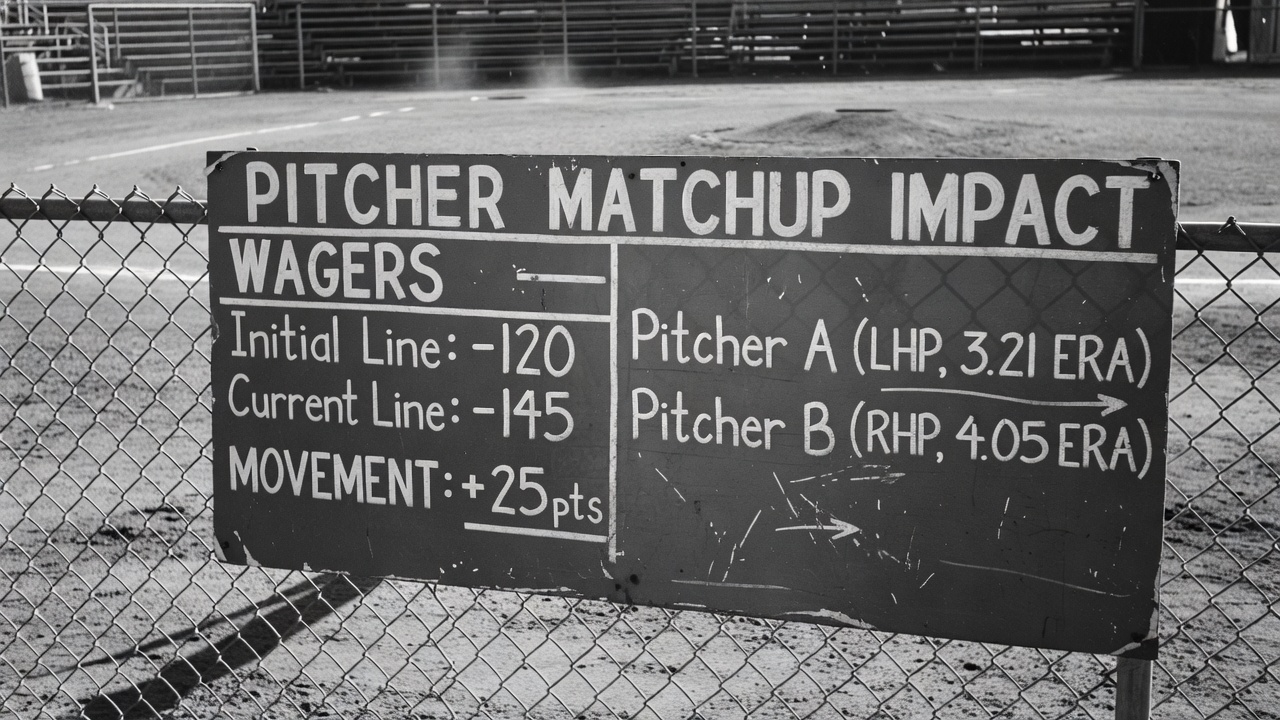
Upon announcement that Team A's ace will start (probability: 0.640 to win), the line shifts. The book must now adjust to reflect this new information. The opening moneyline might have been -110 (American odds, meaning wager 110 to win 100). Once the pitcher is confirmed, the line may move to -130 or -150, depending on perceived pitching quality differential.
Why Pitching Matters
Unlike many sports, baseball grants disproportionate control to a single player. The pitcher determines ball placement, velocity, and variation. Accordingly, a team's expected runs increase materially when quality pitching is deployed.
Consider concrete data: a pitcher with a 2.80 ERA (earned runs allowed per nine innings) typically permits approximately 3.5 runs across a complete game effort. A pitcher with a 4.20 ERA permits approximately 5.25 runs. This two-run differential, multiplied across nine innings and across the season, produces substantial variance in win probability.
Sportsbooks price this relationship via Pythagorean expectation models and similar frameworks. Therefore, once a pitching assignment is confirmed, the line reflects the new expected-run relationship.
Common Line Movements
When a team announces its opening-day ace will start, lines typically move 30 to 60 basis points in that team's favor. This movement is not arbitrary; it represents updated probability assessment based on historical performance data.
Conversely, when a team announces a pitcher on short rest or a rookie making his debut, lines may shift against that team. The book recognizes elevated variance and unknown factors.
Practical Application
Bettors and operators monitor pitcher health status, recent ERA trends, opponent-specific statistics, and rest days. In practice, this means:
- A pitcher with a 3.20 ERA against right-handed batters but a 4.80 ERA against left-handed batters will see line movement if the opposing team features an unusual composition of left-handed hitters.
- A pitcher returning from injury sees larger line movement because uncertainty is elevated.
- A pitcher facing a team that bunts extensively may see smaller line shifts than underlying ERA suggests, because batting average and walks matter less than on-base percentage.
Regulators require that operators maintain precise documentation of pitcher-impact assumptions. Accordingly, a book must be able to defend its line movement against regulatory scrutiny.
The relationship between pitcher assignment and betting line is not mystical. It is mechanical. The pitcher controls run production. Run production determines outcomes. Outcomes determine moneylines. Therefore, pitcher announcements precede and predict line movements.