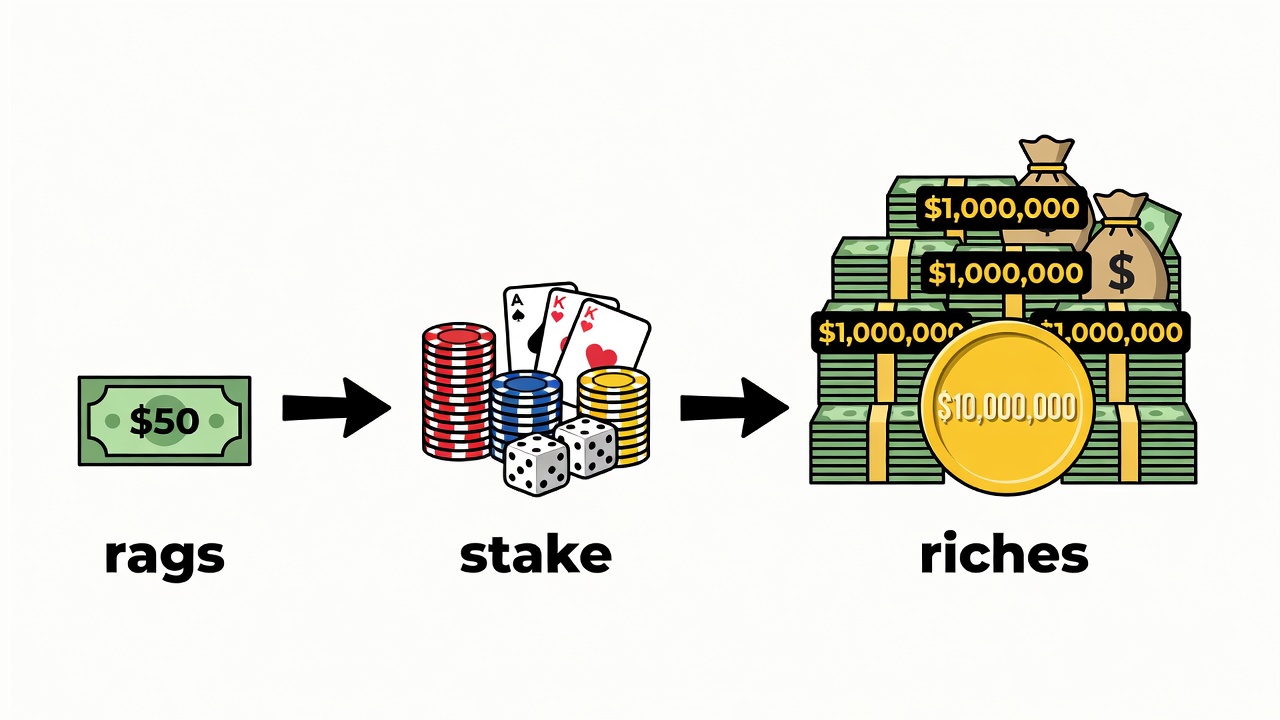
In December 1992, Archie Karas was broke. Completely broken. No bankroll, no prospects, no home to speak of. He was a backgammon player in Las Vegas, and backgammon was dying. He borrowed fifty dollars from a friend. That fifty dollars became four billion in total handle. That is the extraordinary part.
Karas was a Greek immigrant who had come to America obsessed with games of skill. He did not think of gambling as a vice; he thought of it as a form of competition. The best players won. The worst players went broke. It was a meritocracy, he believed, and he was excellent.
The First Year: Forty Million
Karas started shooting pool at Billiards Parlor on Las Vegas Boulevard. He beat every player in the room. Within weeks, he had parlayed the fifty dollars into thousands. Word spread. Word always spreads. A Greek immigrant with exceptional backgammon skills and nerves of steel was accumulating money.
He moved to high-stakes poker games. At the Mirage and the Binion's Horseshoe, he sat against the best players Vegas had to offer. Johnny Chan. Doyle Brunson. These were men who had won millions. Karas beat them. For approximately three years, he did not lose. This was not a hot streak; this was something approaching a permanent condition.
By 1994, he had earned forty million dollars. Forty million. In ninety-two months, from fifty dollars to forty million. Journalists came. Television networks came. Everyone wanted to know: who was this man?
Karas had discovered something about high-stakes poker. The games were not about chance; they were about discipline, patience, and an ability to detect when opponents were playing poorly. Karas was brilliant at detecting when to attack and when to fold. He understood ranges before the word became fashionable. He played poker the way superior intelligences play chess: several moves ahead, always.
The Mathematics of a Hot Streak
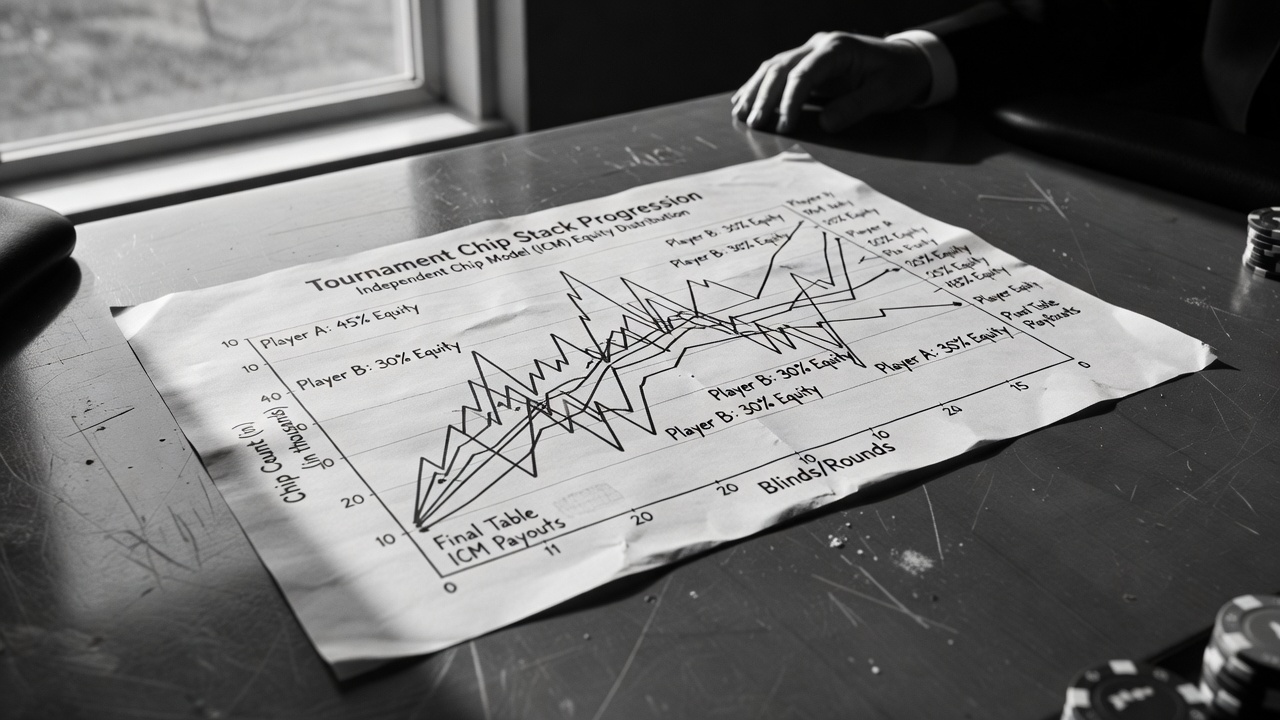
But something was shifting. Karas had been winning against the best players in the world for thirty-six months straight. The odds against this were astronomical. At some point, mathematics demands that a streak ends. Variance is patient, but it is not forgiving.
In 1995, Karas began to lose. Not slowly. Catastrophically. He dropped ten million. Then twenty million. Then thirty million. His forty million dollar fortune was evaporating like rain on hot asphalt. Other players who had watched him win were now watching him hemorrhage.
The Fall
By December 1995, Karas had lost nearly all of it. From forty million to a few hundred thousand. The man who had been invincible for three years was reduced to desperation. He was overextended, playing with borrowed money, making increasingly poor decisions. His discipline, which had been his greatest asset, had abandoned him.
The lesson emerged with terrible clarity: a winning streak, however extraordinary, does not confer immunity from variance. Karas had outplayed his competition. That was real. But he had also been blessed by fortune. And fortune, by definition, reverses course.
Karas never recovered. He remained in Las Vegas, playing smaller games, telling his story to anyone who would listen. Documentaries were made. His name became synonymous with both the transcendent possibility of gambling and its ultimate cruelty.
What the Story Teaches
Archie Karas reminds us that gambling, even at the highest levels, remains a conversation between skill and chance. He had skill in abundance. For three years, chance favored him. When chance turned, all the skill in the world could not save him.
The tragedy is not that he went broke. The tragedy is that he believed a forty million dollar fortune meant he had transcended variance. He had not. No one ever does.
His story stands as the greatest illustration of what gambling can do: elevate a man to heights of success, and then, with perfect indifference, cast him down.