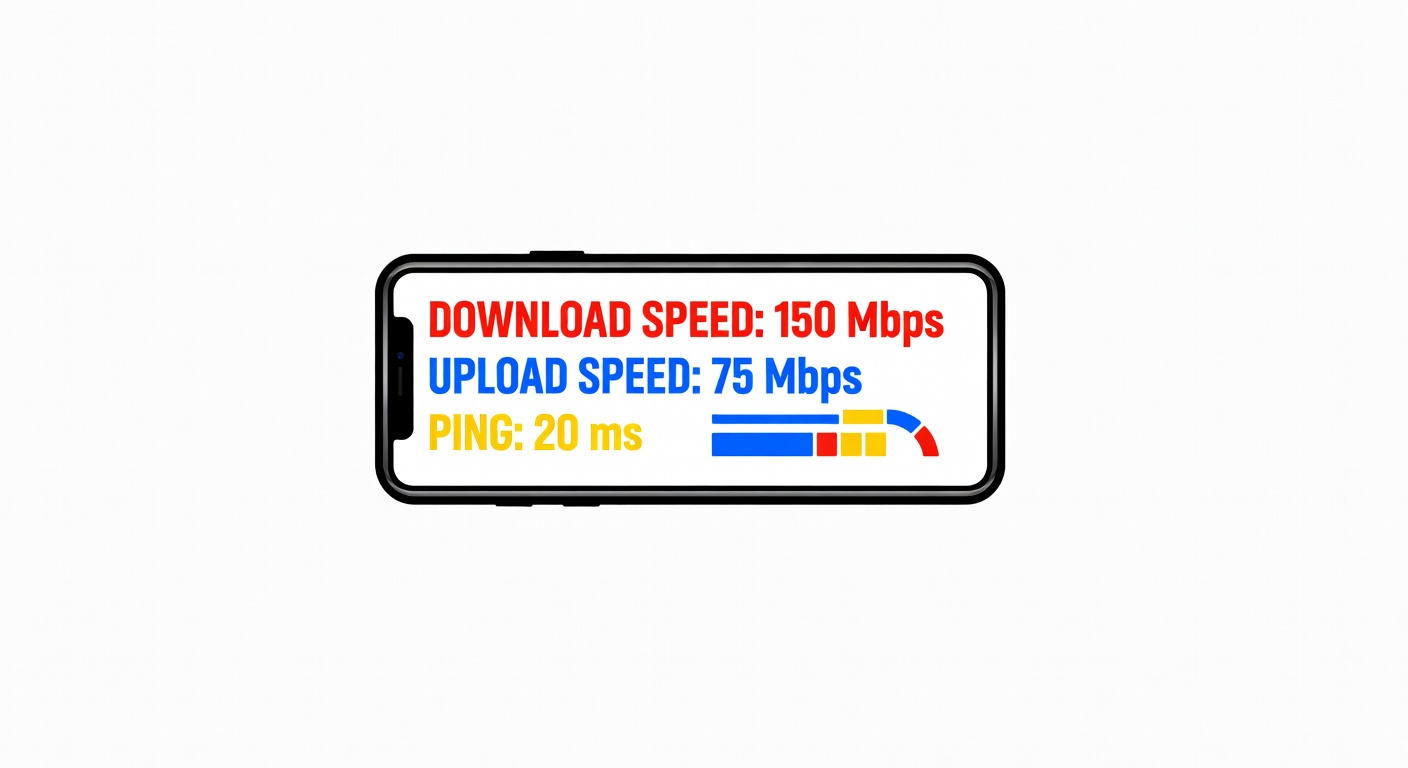
Live casino games require a stable internet connection because they rely on real-time video feeds and instantaneous hand-signal transmission between your device and the dealer.
If you've played live blackjack on a 4G connection that drops periodically, you've experienced what researchers call a latency-induced abort. The game pauses. Your hand freezes. The dealer continues without you. This is not a technical flaw. It's a limitation of physics.
The Technical Reality
A live casino hand moves at human speed. The dealer places cards face down. The player signals (by touching the felt or clicking "hit"). The signal transmits to the server. The server broadcasts that signal to the dealer's monitor. The dealer acts. The camera captures the action. The video compresses and streams to your phone. That entire cycle happens once per decision and sometimes twice per hand.
Each cycle introduces latency. Camera to compression to network to your phone is typically one to three seconds under perfect conditions. On a weak connection, this becomes five to ten seconds. On a disconnecting connection, it becomes a dropped hand.
Live games require minimum bandwidth and maximum stability. An HD video stream needs about five megabits per second. Your 4G connection might provide that in ideal conditions. But stability matters more than speed. A consistent three megabits is better than an intermittent eight. A dropped connection for even two seconds during your action will likely exclude you from that hand.
Why This Matters for Your Bankroll
Studies on decision-making under uncertainty show that time pressure significantly affects choice quality. Players with stable, fast connections make better decisions because they don't feel rushed. A player on a laggy connection feels panicked when the dealer is waiting. Panic leads to different betting decisions and different hand selections.
This isn't moralizing. It's neurological fact. The amygdala (your threat-response system) activates under time pressure. When activated, it suppresses the prefrontal cortex (your rational planning system). You're more likely to make impulsive decisions: hit when you should stand, split when you should hold.
Live casino operators understand this. They build in latency intentionally on some platforms. A small delay makes players more anxious. Anxious players make worse decisions. Worse decisions generate slightly higher loss rates for those players.
Testing your connection before playing means knowing whether you're operating under artificial disadvantage. It's not that you'll play badly with a slow connection. It's that you'll feel more pressure, which alters your behavior.
The Practical Test
Open a speedtest site (speedtest.net, fast.com, or similar) from the location where you'll play. Run the test three times across fifteen minutes. You want to see: (1) at least five megabits per second download, (2) less than one hundred milliseconds latency, and (3) consistent results across the three tests.
If you're getting three megabits with one-hundred-fifty millisecond latency on test one and forty milliseconds on test three, your connection is unstable. Playing live games on that connection will create variable conditions that might disadvantage you.
WiFi introduces additional complexity. Your home WiFi might show fast speeds to speedtest but slow speeds to a video stream, depending on interference and distance from the router. If you're playing on mobile, test from the exact location you'll play from. If you're on WiFi, test from close to the router and from the location where you'll sit. If you see difference, your signal is weak in that location.
The Behavioral Consequence
Research on time-constrained decision making in gambling shows that slower processing correlates with longer consideration periods and better hand-selection in poker-adjacent games. When players know they have time, they think more. When they don't, they react more.
You can't control the house edge. You can control how much pressure you're under while playing. A stable internet connection is one dimension of that control. It's not a guarantee of better outcomes. It's a guarantee of decision-making under your preferred conditions rather than the house's preferred conditions.
The casino benefits from players who feel hurried. You benefit from players who feel rushed. The difference between a three-second latency and a ten-second latency is a real psychological variable. Testing your connection before sitting down is testing whether you're placing yourself in a disadvantaged frame of mind.
This applies to all live casino games. Roulette is slower, so latency matters less. Baccarat is faster, so latency matters more. Blackjack is somewhere between. If your connection is weak, roulette remains playable. Blackjack becomes a test of how well you handle pressure.