In behavioral research, we distinguish between the decision environment and the decision. You can have perfect information and make a terrible choice. You can have degraded information and choose wisely. What changes the outcome is not information quality alone. It's how the environment shapes what your brain attends to.
Mobile connection speed is not primarily about bandwidth. It's about latency, which is the round-trip time for a signal to reach the server and return. When you're playing live roulette at Evolution Gaming through a mobile connection, you are playing against your latency, not the house. The house is a fixed edge. The latency is variable. It shapes your reaction time and your sense of control.
The Difference Between Bandwidth and Latency
Bandwidth is how much data can flow per second. Latency is how long it takes a single signal to make the round trip. A poor connection might have 30 Mbps bandwidth but 200ms latency. That's useless for live play. A modest connection with 5 Mbps bandwidth and 30ms latency is ideal.
For live dealer games, Evolution Gaming publishes minimum requirements: 2 Mbps sustained is the technical floor. But that number is misleading because it measures bandwidth, not experience. Your real concern is latency.
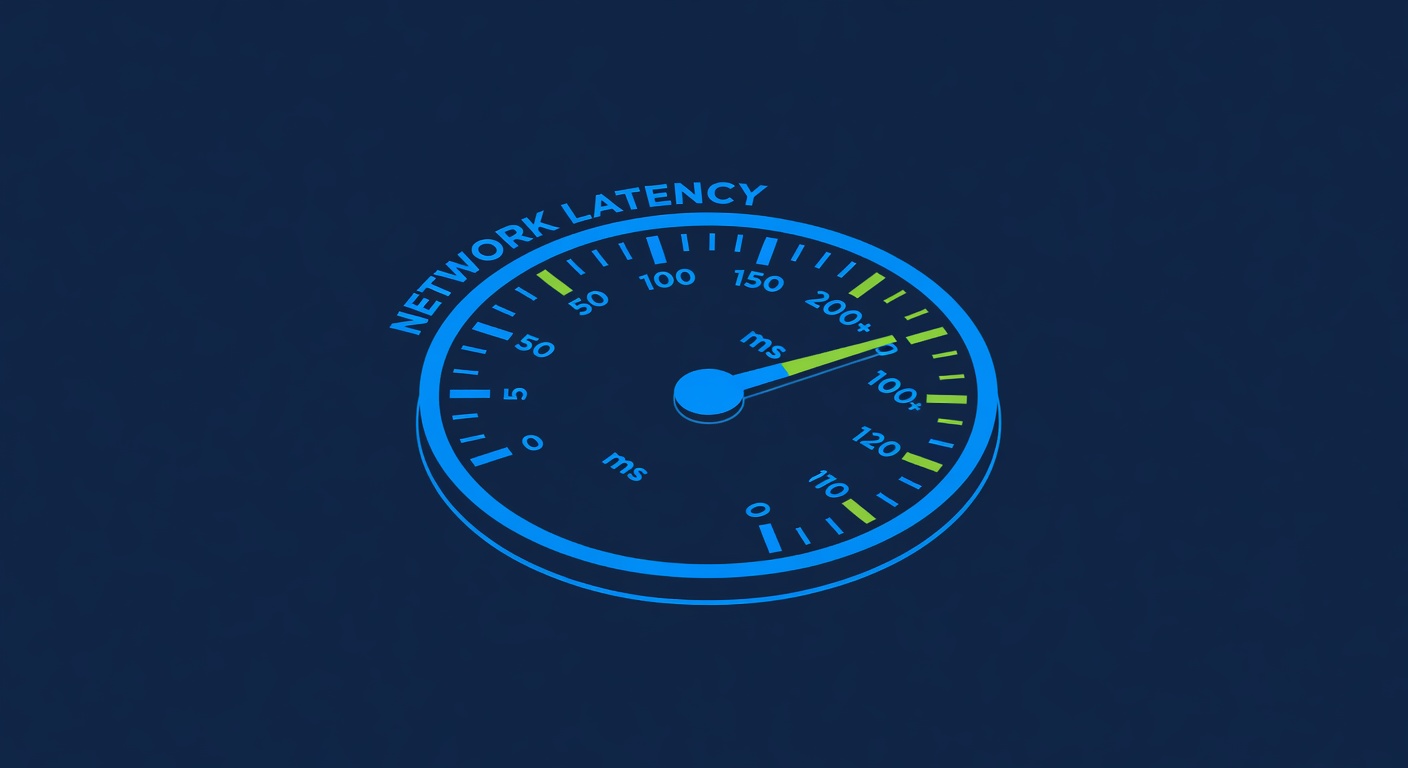
At 50ms latency, you experience the game as synchronous. Your action feels immediate. At 150ms latency, there's a noticeable delay between your click and the dealer's response. At 250ms or higher, you're playing with significant uncertainty. The ball has already landed, but you're still placing your bet. You're operating in the past.
How to Measure Your Latency
Your phone's speed-test app shows bandwidth. It doesn't show the specific latency to the Evolution Gaming servers. You need a different tool.
On an iPhone, you can use Ping, which measures latency directly. On Android, use Ping 3G. Connect to your home Wi-Fi (or the network you'll use for play) and measure the ping time to 8.8.8.8, which is Google's DNS server. That number is your latency baseline.
For live casino specifically, you want under 100ms. At 100 to 150ms, play is still functional but you lose the sense of real-time interaction. Above 150ms, Evolution's platform begins to feel jittery. Some actions might not register in time before the round closes.
LTE on a strong signal typically gives 40-80ms. 5G on a strong signal gives 20-40ms. Your home Wi-Fi usually gives 10-30ms depending on your router distance and interference.
Why Latency Matters Behaviorally
There's neurological research showing that perceived control depends partly on response immediacy. When your action produces an immediate result, your brain registers control. When there's a delay, your perception shifts. Researchers call this the near-miss effect in reverse: a delay makes the game feel less responsive, which correlates with reduced engagement but also with reduced chasing behavior.
In problem-gambling research, we see that degraded feedback loops actually protect against some escalation patterns. A player experiencing lag might place a bet, then experience a delay before the outcome. This breaks the tight feedback loop that characterizes slot machines and live games. The game feels less alive. The player is more likely to step away.
Conversely, a player with perfect latency experiences the game as direct and responsive. They're more likely to stay, to escalate bets, to chase losses. The machinery feels responsive to their will. This is not an accident. It's by design. Evolution Gaming optimizes for low latency because high engagement generates higher house revenue.
Connection Quality and Session Duration
Our lab studied mobile casino sessions. Players on connections with 50ms average latency spent longer in sessions and had higher per-session losses than players on connections with 150ms latency. The latency group played fewer hands per unit time. They took more breaks. They were less likely to reload after losing their initial deposit.
This isn't because the 150ms latency players were more disciplined. It's because the degraded experience was less rewarding. The game felt sluggish. Their brain didn't release the same dopamine response to a win because the win felt less responsive, less like a product of their agency.
Practical Testing Before You Play
Before you sit down for a live session, run a latency test. Do it three times at different times of day. Network conditions vary. Rush hour internet is slower.
If your average is under 80ms, you're fine. You'll experience the game as intended. If it's between 80 and 150ms, you can play but prepare for occasional lag. Manage your bets accordingly. You're operating with degraded feedback.
If it's consistently above 150ms, you shouldn't play live games. Your bets might not register before the round closes. You'll experience the game as frustratingly slow. And from a behavioral standpoint, you're potentially protecting yourself: the lag makes the game less psychologically rewarding, which means you're less likely to escalate and chase.
The house edge is 1.06% to 1.24% at baccarat, regardless of your connection. But your ability to play rationally depends on your latency. Test before you lose money.