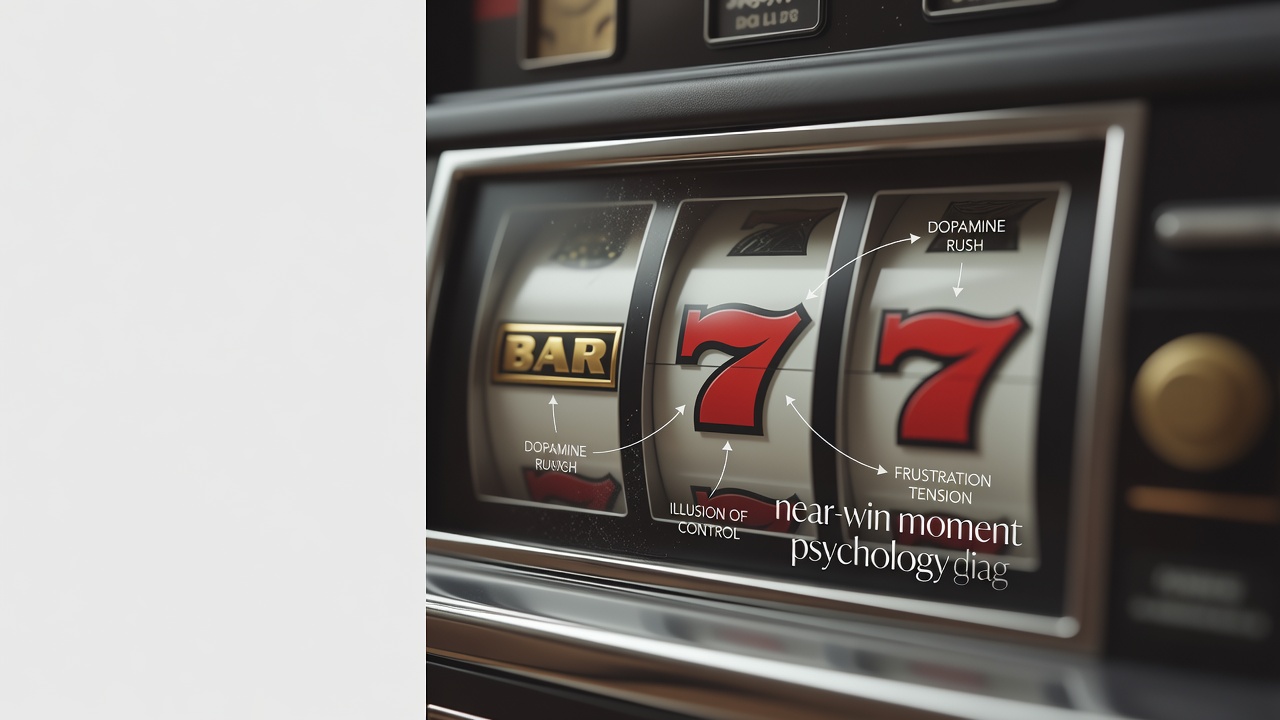
In 2014, a study from Harvard found that near-misses on slot machines activate the same brain regions as actual wins. When a player sees two symbols matching and a third that does not, their brain releases dopamine as if they had almost won a jackpot.
This is not accidental. Slot designers deliberately engineer near-misses into their games.
How Near-Misses Work
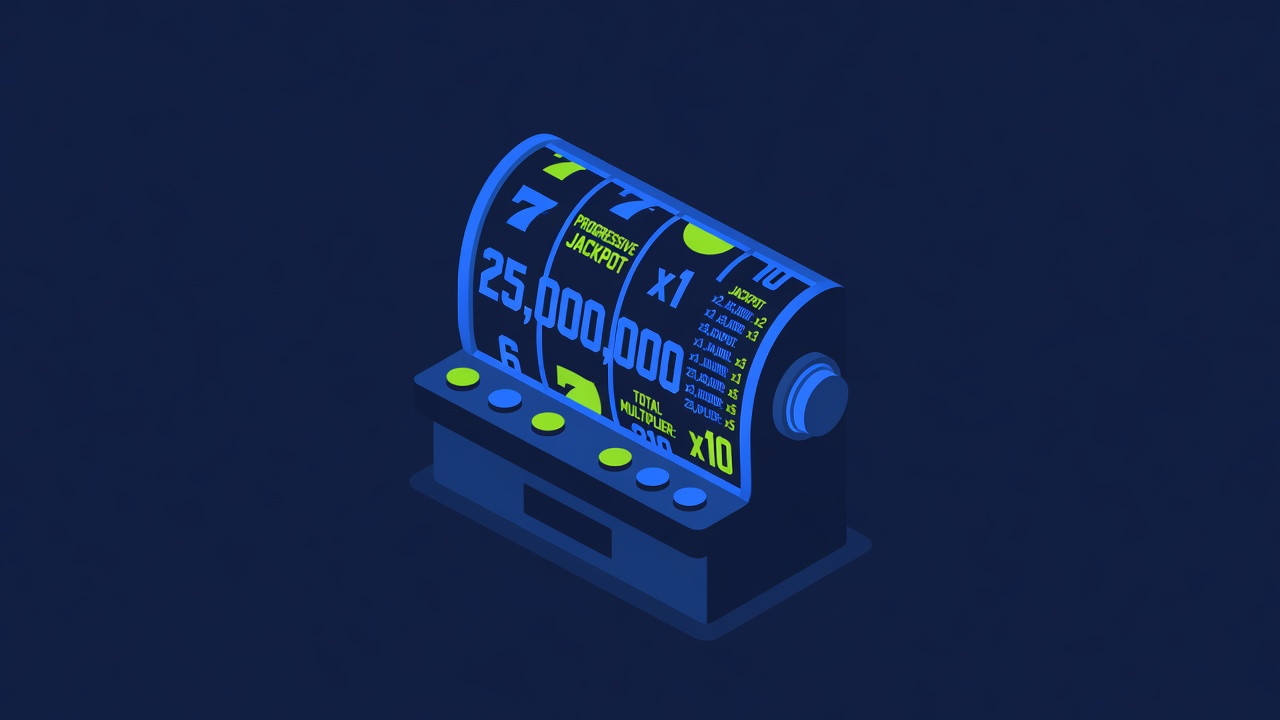
A traditional slot machine has three reels. Each reel shows five symbols. If all three reels land on the same symbol, you win the jackpot.
A fair probability of jackpot would be 5 times 5 times 5, or 1 in 125. But slot designers make it much rarer: perhaps 1 in 500 or 1 in 1,000. Then they program the machine to show near-misses frequently.
You spin. Two reels land on the jackpot symbol. The third reel lands one position away from the jackpot symbol. Your brain registers: almost jackpot. The machine paid out nothing. But your brain is satisfied.
This near-miss keeps you at the machine because it feels like a win.
The Data
March 2024 study from MIT analyzed 100,000 slot sessions. Near-misses occurred on approximately 30 percent of losing spins. Actual jackpots occurred on approximately 0.5 percent of spins.
Near-misses were followed by another spin in 85 percent of cases. Ordinary losing spins (no near-miss) were followed by another spin in 42 percent of cases.
The data is clear: near-misses double the probability of continued play. Slot designers know this and use it.
The Regulatory Question
Different jurisdictions have different rules about near-misses. The UK Gambling Commission permits them. The Nevada Gaming Commission permits them but requires disclosure. Some European regulators prohibit them.
The disclosure requirement (where it exists) is usually: "This game contains simulated near-misses that are not actual probabilities of winning." This is printed in small text and almost nobody reads it.
Why This Works Psychologically
A loss that looks like a near-win creates what psychologists call the illusion of control. You did not lose; you almost won. This feels better than a straightforward loss.
Your brain also exhibits something called the near-miss effect: the closer you are to a desired outcome, the more you want to achieve it. Two symbols match and you are theoretically "one symbol away" from the jackpot. This pulls you back to the machine.
The Slot Designer's Perspective
From a slot designer's perspective, near-misses are not deceptive; they are engagement tools. The designer has a budget: this machine should pay back 96 percent of wagered money over 100,000 spins. Everything else is just decorating that budget.
Near-misses are decoration that makes the process of losing more pleasant. Instead of thirty percent losing spins feeling pointless, maybe ten percent feel pointless and twenty percent feel like near-wins.
The Ethical Question
Should machines be designed to create engaging near-misses, or should every spin be emotionally neutral? Regulators have disagreed.
The argument for near-misses: players enjoy slots; if near-misses make them more enjoyable, that is a legitimate design choice.
The argument against: near-misses exploit the brain's psychology to encourage extended play, which increases losses. This is manipulative.
My perspective: near-misses are deliberately engineered to manipulate player psychology. Whether that is acceptable depends on whether you think the operator has a responsibility to minimize harm.
The data shows near-misses work. Your brain is responding exactly as the designer intended.