I'm going to tell you about a hand because that's how you learn poker, and this story has teeth.
There's a room. Not a fancy one. The kind where the cards come back sticky and someone's always eating hot Cheetos and getting dust on the felt. We're playing five-card draw, stakes are low, and there's maybe ten players, the type that are there for the action and the talk, not the money.
This guy sits down. Good player, tight, knows his ranges. We're four hours in when the hand comes.
He's in early position with a starting hand that looks strong. I can tell by his breathing. Anyway, action comes around, three people in the pot, and it's his turn on the next street. He bets. Not a normal bet. He bets three times the pot size. Triple. Just insane.
The table goes quiet. People fold fast. One guy asks him outright, "Are you really doing this?" He wins the pot uncalled. No one's sure what he had. Then the next hand, he does it again.
After about an hour of this, someone finally called him down, and he had a pretty strong hand. Won. The calling player was visibly frustrated because the overbet had worked. Turned a good spot into a bluff.
Here's what it taught me about overbetting:
You Need a Clear Reason
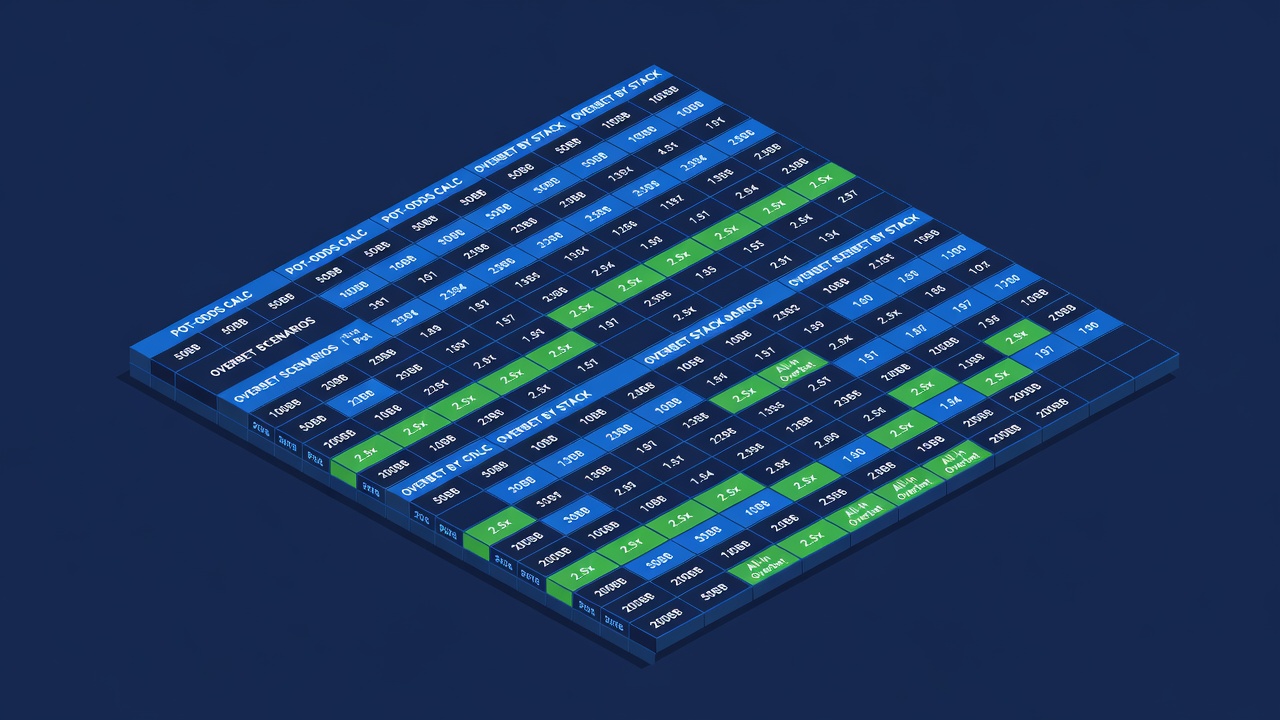
Overbetting is when you put in more chips than the pot size on a single bet. A five-dollar pot, you bet fifteen dollars. It happens in every game at some point, but good players do it with intent. The guy in the story was trying to define the hand. He wanted people to fold immediately. He wanted to make the decision easy in the wrong direction.
In live poker, overbetting works sometimes because human beings are emotional. They see a massive bet and they think, "That guy's trying to bully me." Pride tells them to fold. Fear tells them to fold. Either way, they're gone.
The problem is you can't make that play work consistently. It broadcasts the exact thing you're trying to hide. If you overbet with strong hands, good players will notice. If you overbet with weak hands, they'll exploit it.
When It Actually Makes Sense
Theory says overbetting is for thin value on the river. Imagine the pot is 100 dollars. Your hand is strong but vulnerable. You bet 150 dollars. You're not trying to get called by a better hand. You're trying to fold out hands that draw poorly against you while still getting called by hands that are slightly weaker.
It's a narrow use case. Most of the time, a normal-sized bet does the same work cheaper.
Live, I've seen overbetting work in one specific spot: when someone's running wild, winning everything, and then overbet. Everyone's tilted at them, so they shove it in, and half the table tries to break them. Sometimes the overbettor wins that chaos. Most times they don't.
The Real Cost
The guy at the game got his chips soon enough. People got tired of folding and started calling him down. When he showed up weak twice in a row, the table had him figured out. He left down money.
Overbetting is a tactic, not a strategy. It works once. Maybe twice. After that, it costs you. Everyone at the table knows what you're doing, and they adjust.
If you're thinking about overbetting, ask yourself first: could you achieve the same goal for less money? If the answer is yes, do that instead. The money you save is money you keep.