There was a famous incident, not widely discussed because the operator killed the story through lawyers, wherein a professional bettor in Eastern Europe attempted to manipulate the odds on a minor football league match through a series of coordinated bets across multiple operators. He was certain he'd found an inefficiency. The Betting Integrity Bureau caught him in ninety minutes. He lost the account. The bookmakers coordinated a silent ban that followed him across three continents.
We think of sports betting as a game between a bettor and a bookmaker. It's not. It's a game between a bettor and an apparatus that monitors billions of dollars moving across thousands of markets in real time. The apparatus is designed not to catch cheaters but to catch anyone attempting to profit from information asymmetry.
The Structure of Integrity Monitoring
When you bet at DraftKings or FanDuel on an NFL game, your bet enters not just their system but a shared monitoring infrastructure. The Sporting Chance System, for instance, tracks bets across multiple operators in real time. If a significant sum suddenly flows toward an undervalued outcome, the system alerts both the operator and the governing body.
This is not traditional security. There's no password cracking or account hijacking. It's behavioral analysis at scale. The system knows the typical betting pattern for an NFL game. It knows how much money flows to the Eagles, what time it peaks, what the line movement looks like. When something deviates, the system notices.
Genius Sports runs a similar infrastructure. They monitor sports integrity for leagues and operators across forty countries. They correlate betting data with actual game data. They feed that information into predictive models. When a model detects an anomaly, it escalates.
How Anomaly Detection Works
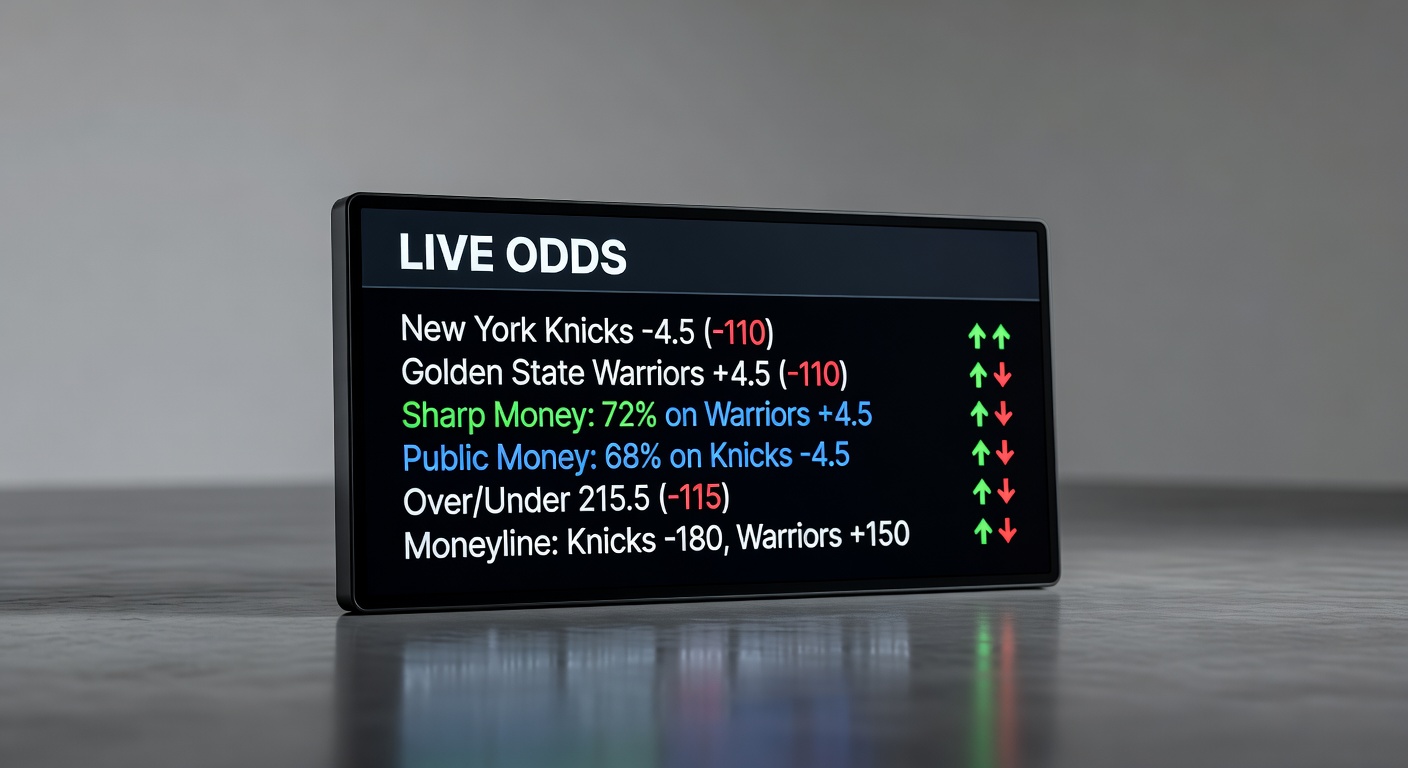
An anomaly in betting is not a single large bet. It's a pattern of behavior that contradicts the market's previous learning. If 50 million dollars flows into Liverpool at -120 in the 30 seconds before kickoff, the system doesn't flag it based on size. It flags it because Liverpool never moves more than 3 million dollars in that time window, and you'd need some kind of information advantage to justify the sudden movement.
The system asks: what changed? Did new information come to market? Did an injury get announced? Did the bookmakers correct a line? If there's a legitimate news event, the variance is explainable. If there's no news, the system asks a second question: who placed these bets and from where?
A coordinated scheme across multiple operators requires accounts, funding sources, and consistent behavior. Betting integrity systems cross-reference accounts, funding patterns, and bet placement timing. They're looking for the signature of someone trying to move a line:
- The same account or related accounts betting opposite sides at different operators.
- Coordinated timing across accounts to create the appearance of uncorrelated action.
- Unusual geolocation patterns or VPN usage.
- Sudden account activation followed by large, correlated bets.
The Role of Operators and Leagues
Operators like Bet365 and DraftKings are required by licensing bodies to report integrity concerns. The UKGC requires all licensed operators to maintain integrity protocols. The MGA requires the same. The Curaçao eGaming framework is less strict, which is why operators licensed in Curaçao are less likely to participate in coordinated monitoring.
Professional leagues also maintain their own integrity monitors. The NBA, NFL, and Premier League all employ security infrastructure. They monitor betting markets not to catch winners but to catch match-fixing, insider information, or systematic corruption. A coach or player isn't placing a personal bet. They're trying to influence game outcomes.
The Betting Integrity Bureau coordinates between leagues and operators. Their role is to ensure that a single piece of intelligence is shared across the entire market ecosystem. If there's credible evidence of corruption in a lower-division match in a European league, that information reaches every major sportsbook within hours.
What Gets Flagged
Not every unusual bet gets flagged. A single sharp bettor placing a large bet on a market inefficiency is not a threat. Sharp money is expected. The Betting Integrity Bureau's models are trained to distinguish between legitimate edge-finding and coordinated market manipulation.
Here's what gets escalated:
- Unusual patterns of small bets across multiple accounts designed to look independent but placed with algorithmic timing.
- Bets placed after injury announcements or insider information but before the announcement becomes public.
- Sudden line movements that predate public news.
- Bets placed by accounts with connections to team staff, coaches, or officials.
- Coordinated deposits from the same geographic region into seemingly unrelated accounts.
The Practical Consequence
For a sharp bettor, integrity monitoring means that exploiting a market inefficiency requires speed and distribution. You cannot place a large bet and watch the line move slowly. The line will move, sure, but the system will watch it move and correlate that movement with your account.
For a casual bettor, integrity monitoring is invisible. You place a bet, you win or lose, you move on. The system isn't watching you. You're not moving a market.
For someone attempting a coordinated scheme, the system is a wall. You cannot move a professional sports line anymore through brute-force betting. The apparatus is too good. The Betting Integrity Bureau has spent a decade building models that understand the shape of legitimate market behavior. They know what a sharp bet looks like. They know what a scheme looks like. And they've chosen to make the distinction obvious.
The house doesn't beat you at sports betting through luck. It beats you through information dominance and surveillance so complete that you can't move a yard without the system noticing. The odds are slight. The infrastructure is absolute.