Basic strategy in blackjack is not complex, but it requires precision. Deviate from it, and your expected loss per hand increases. The rules are: hit or stand based on your hand and the dealer's upcard. Double down on certain hands. Split pairs in specific situations. Insurance is almost never correct.
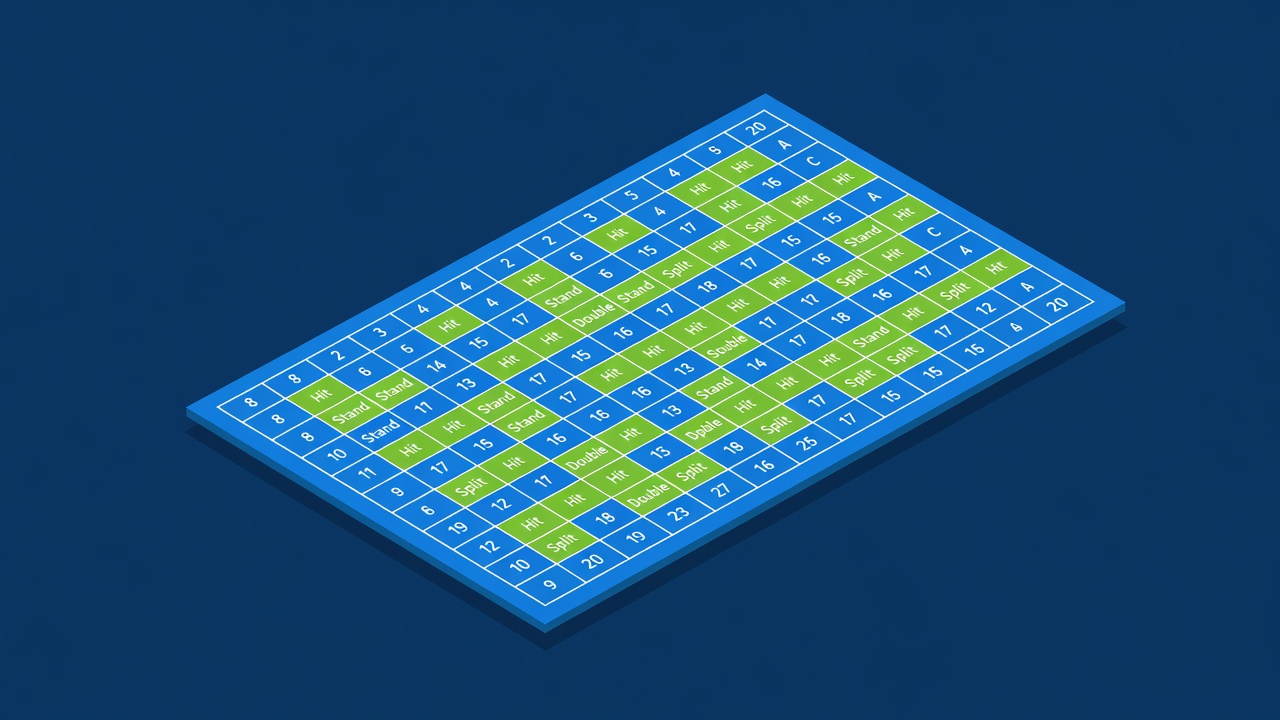
A basic strategy chart fits on one page. It has 169 distinct player hands mapped against 10 dealer upcards. That is 1,690 decision points. Most players can internalize the majority through repeated exposure. But certain edge cases (like hitting on 16 against a 7, or standing on 12 against a 4) trip up players who've learned roughly but not precisely.
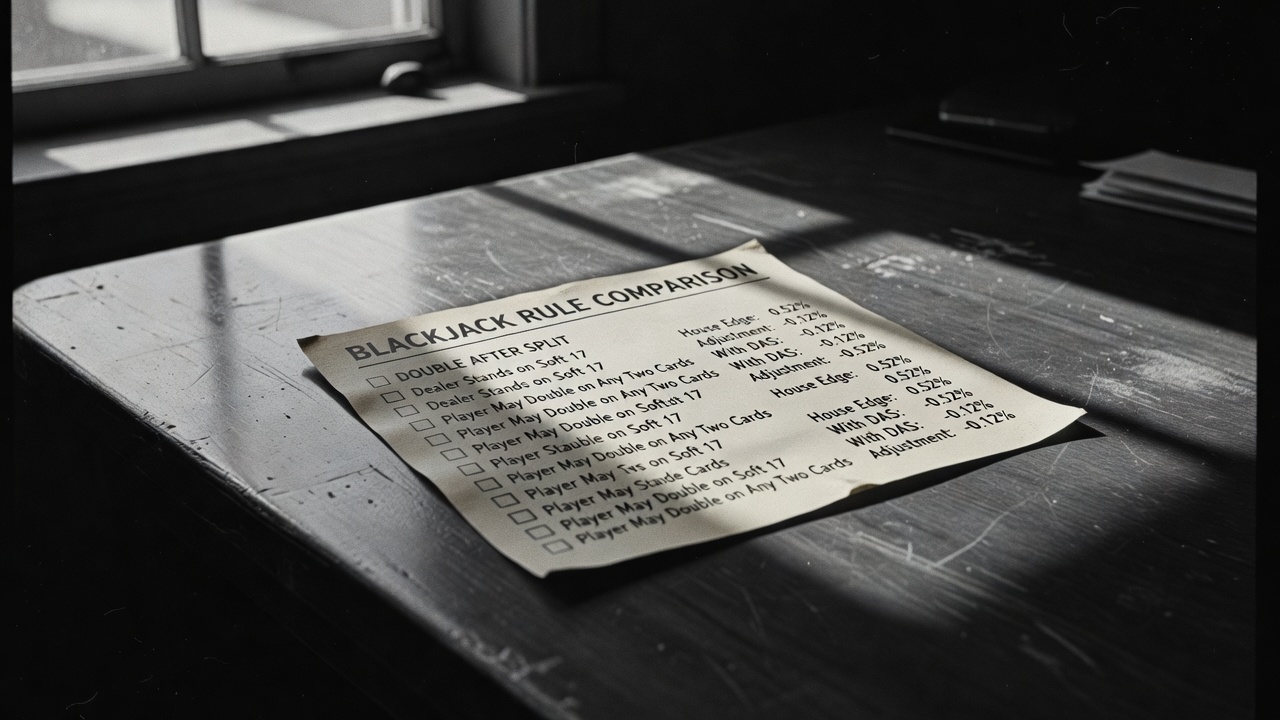
The consequence is measurable. Basic strategy players have a house edge of about 0.5 percent. Casual players with fuzzy knowledge have a house edge of 1.5 to 2 percent. That difference compounds over thousands of hands.
Why Memorization Works
Basic strategy works because mathematicians have calculated the correct play for every situation. The decisions are deterministic. Given a player hand and a dealer upcard, there is one best action. Using the strategy does not eliminate the house advantage. It minimizes it.
Memorization is necessary because you need to make decisions quickly in real play. You cannot consult a chart at a live table. Online casinos permit you to use a chart (some explicitly, some implicitly), but the practice is unusual. If you play in a casino where you can't refer to materials, you must internalize the strategy.
Flash Cards
Physical flash cards are simple and low-tech. One side shows a player hand and dealer upcard. The other side shows the correct action. You flip through them, attempt to recall the right move, check yourself.
The utility of flash cards depends on discipline. Daily practice (15 minutes) over three weeks will embed most of basic strategy. Sporadic practice (once or twice a week) will not. Most people don't maintain the discipline.
Major casino supply companies sell blackjack flash card decks. The format is standardized. Everi (formerly Everi Holdings, formerly IGT) publishes them. Some poker supply companies also carry them. Cost is 5 to 20 pounds.
Advantage: physical, tactile, no screen dependency. Disadvantage: passive. You're flipping cards but not getting feedback. You cannot track your progress or identify which decisions trip you up most.
Mobile Apps
Mobile apps add structure. The best ones are built with spaced repetition in mind. Anki (a free, open-source flashcard app) can be loaded with basic strategy decks created by users. The app uses an algorithm to repeat cards you struggle with more frequently.
Blackjack Basic Strategy is a dedicated app by a developer named Andrew Zhang. It costs 4.99 pounds on iOS and Android. The app presents scenarios: player hand on the left, dealer upcard on the right. You swipe to select your action (hit, stand, double, split). The app immediately tells you if you're right. It tracks your accuracy and time per decision.
The advantage of this app is feedback loops. You know immediately if you're wrong. You cannot deceive yourself. The app also gamifies memorization (tracks streaks, scores, daily practice goals).
The downside: screen fatigue. Apps require engagement on a phone. Some people retain information better from physical flash cards.
Drill Decks and Online Trainers
Blackjack Trainer (web-based, free, no login required) is a browser-based tool that lets you set parameters. Choose a variation (single-deck, multi-deck, European rules, American rules, etc.). The trainer presents scenarios. You select your action. It scores you.
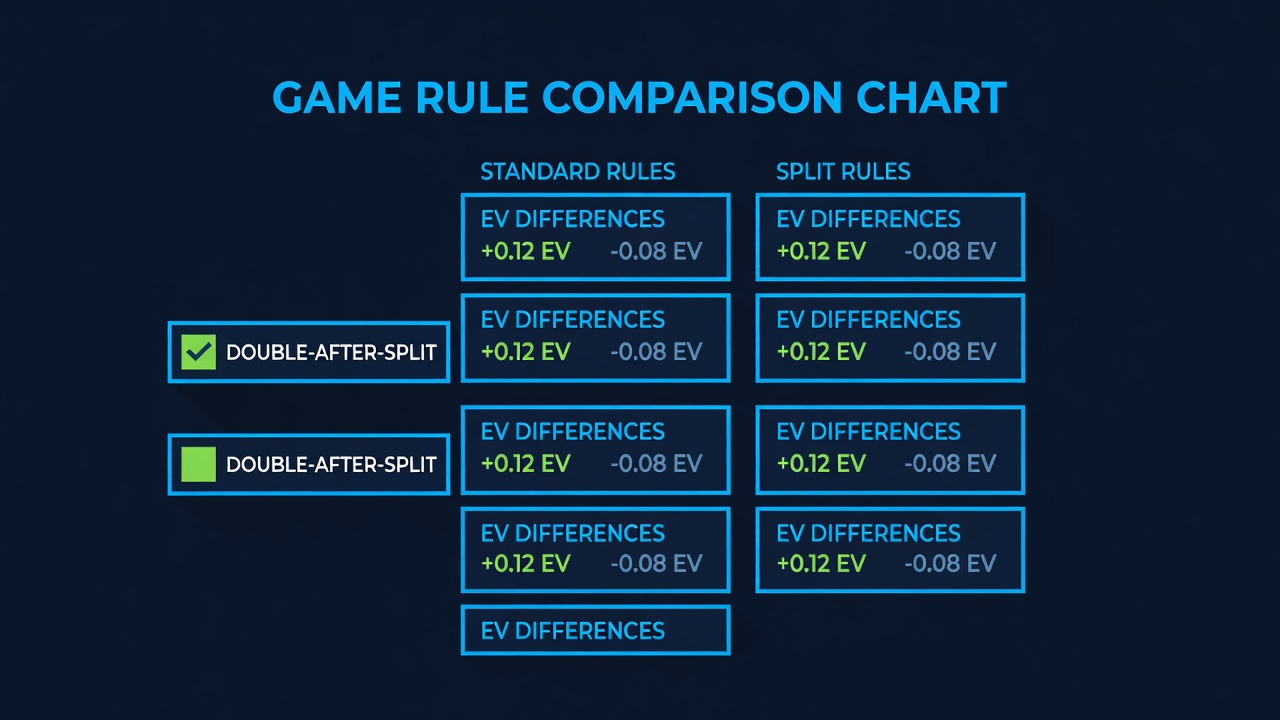
The advantage is customization. You can practice specifically for the rules you'll face in real play. If you're playing European blackjack (no surrender, dealer stands on soft 17), you can drill on those specific variations. The strategy changes between single and multi-deck formats, so this matters.
High-speed Trainer apps exist for Android and iOS. They push you to make decisions faster than real-time play. This is useful if you're the type who thinks deeply but needs to move faster.
Combination Approaches
The most effective approach combines methods. Start with flash cards or an app for two weeks. Get the decisions into your long-term memory. Then switch to an online trainer and practice under game-like conditions (time pressure, multiple decks, specific rule variations). Finally, play for small money online to test your memory under actual betting conditions.
Do not skip the final step. There's a gap between knowing the strategy and executing it under pressure. The first time you're down to your last chips and you have to remember whether to split eights against a nine (yes, you should), the stakes are higher. Practice under pressure.
The Truth About Memorization
Full basic strategy internalization takes 30 to 50 hours of active practice for most people. This is not romantic. It's not fun. It's mechanical drilling.
But the payoff is real. After 50 hours, you can play hours of blackjack knowing you're making mathematically correct decisions. You cannot beat the house (the house always has an edge), but you've eliminated a major source of leakage. The 1.5 percent edge from playing poorly becomes a 0.5 percent edge from perfect strategy. Over 1,000 hands, that's hundreds of pounds of difference.
Choose a tool that fits your learning style. Use it consistently. Be precise. The decisions matter.