In a high-limit room, you learn to recognize the types. The whale comes in with his plane ticket and his setup man. He plays big and loose. The pro comes in with his notebook and his staking plan. He plays tight and leaves when the value disappears.
The bonus hunter is different. He comes in with an operator list. He's not here for the experience of the game. He's here to extract value from the casino's own offers.
How Bonus Hunting Works
An online casino offers a 100% deposit match up to five hundred dollars. You deposit five hundred. You now have one thousand to play with. But the bonus comes with a wagering requirement: you must wager the total (deposit plus bonus) fifteen times before you can withdraw.
Fifteen hundred times fifteen equals 22,500 in required wagering. If you bet fifty dollars a hand at baccarat, that's 450 hands. At average hand length of thirty seconds per hand, that's 3.75 hours of play.
The expected loss at baccarat is 1.06% for Banker bets, 1.24% for Player bets. Over 450 hands at fifty dollars, you'll lose approximately 238 dollars.
So you deposit five hundred, lose two hundred thirty-eight, and end up with approximately two hundred sixty dollars in playable balance. You were paid two hundred sixty dollars to play for 3.75 hours. That's nearly seventy dollars per hour for a boring game.
Bonus hunting is extracting that value.
Where Casinos Go Wrong
Operators offer bonuses because new customer acquisition costs money. A twenty-dollar Facebook ad brings a player. That player is worth maybe fifty dollars if they play normally. But that player might never play at all if there's no incentive. So the casino offers a bonus.
The casino calculates that 85% of bonus-claiming players will lose more than the bonus value long-term. They figure it's worth the 15% that does the math correctly and leaves after clearing the bonus.
But bonus hunters change this calculation. They're not random players. They're systemized. They coordinate across multiple casinos. They know which bonuses have favorable mathematics. They claim them methodically.
From the casino's perspective, this is a market inefficiency. It's a leak in the offer structure.
Why They Discourage It
Online operators respond to bonus hunting in several ways.
First, they restrict bonus eligibility. You must have played at the site before. You must have made a deposit in the past. You must not claim bonuses at multiple operators using the same identity (though this is unenforceable).
Second, they increase wagering requirements. A bonus that required 15x wagering might now require 30x or 50x. At 50x wagering, the expected loss often exceeds the bonus value. The hunters stop coming.
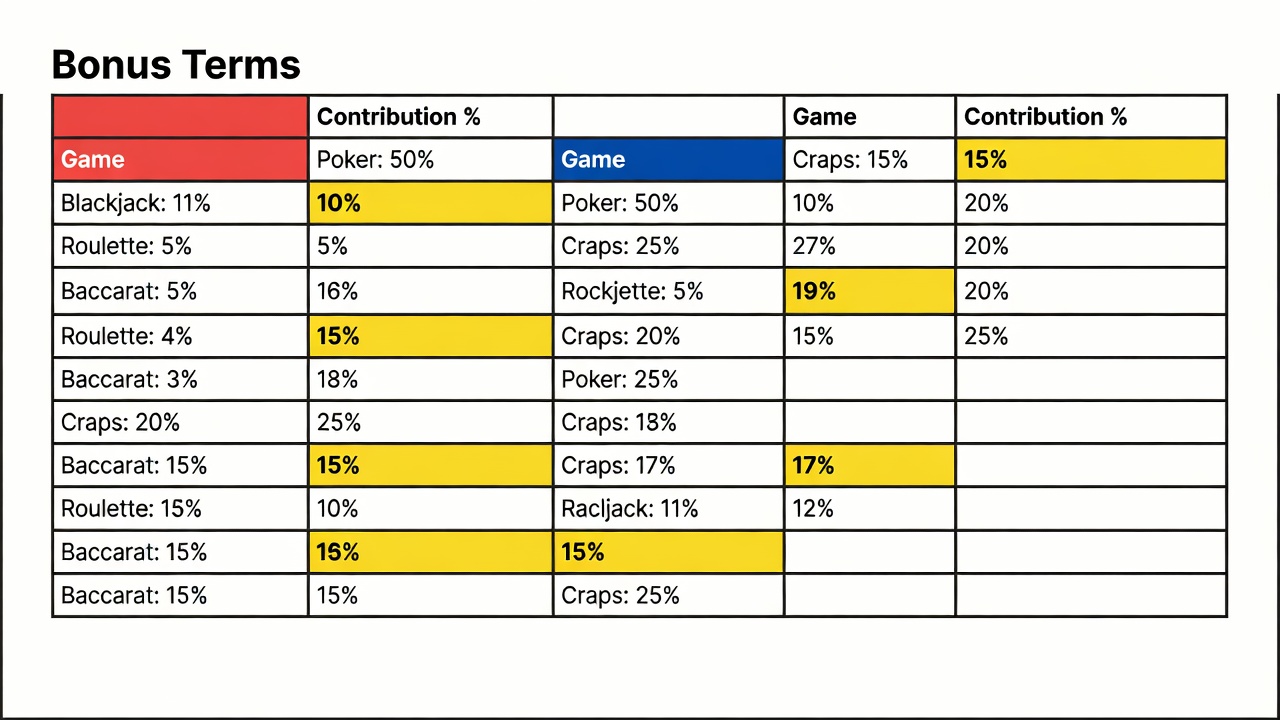
Third, they restrict which games count toward the requirement. Some operators exclude baccarat and roulette (the lowest-edge games) from the wagering calculation. Or they count only 50% of the bet toward the requirement. A four-hundred-dollar bet counts as two hundred toward the requirement. This forces longer play and higher expected losses.
Fourth, they limit the maximum bet during bonus wagering. If you're playing with a five-hundred-dollar bonus, you might only be allowed to bet twenty dollars per hand. This extends the time needed to clear the bonus and increases total expected loss.
These restrictions are not arbitrary. They're specifically designed to eliminate the profit that bonus hunters extract.
The Cat and Mouse Game
Bonus hunters respond to these restrictions by finding new bonuses with better terms. Newer, smaller operators who don't understand the math offer generous bonuses. The hunters exploit them until the operator learns.
There's an entire subculture of forums and Discord servers where bonus hunters share terms, calculate expected value, and coordinate across sites. The level of optimization is sophisticated. A hunter might claim sixty bonuses across sixty operators in a year, spending four hours per bonus on average, netting five to ten thousand dollars.
Operators who become aware of this activity sometimes refuse withdrawals, claiming bonus abuse. This is technically legal but reputationally risky. It's part of the game.
Where I Sit
In my baccarat room, I've dealt to hunters. I recognize them because they play a specific pattern: the minimum bet to satisfy the house edge requirement and no more. They don't get excited about wins. They don't get upset about losses. They're processing, not playing.
I've seen them coordinate with the pit boss. The boss knows what they're doing. Sometimes he helps them play faster. He'd rather have an efficient thirty-minute bonus clear than a confused whale who takes three hours to lose money.
It's a strange ecosystem. The casino knows it's being exploited and tolerates it because the exploitation cost is manageable.
But if enough hunters appear, the operator tightens the terms. The hunters move to less strict operators. Eventually, every operator learns. The free money disappears.
That's where we are now. The era of easy bonus hunting is over. The remaining bonuses require work and patience. Most people don't have the patience. Only the methodical ones remain. They're the real professionals. Respect them.