Stanley Ho was born in 1921 in Hong Kong. He was educated in Hong Kong and Portugal, the two cultures that would define his life. By the 1950s, he had accumulated wealth in shipping and real estate. In 1962, he obtained a concession from the Portuguese colonial government of Macau to operate all gambling activities in the territory.
That concession, and his management of it, would transform Macau into the world's highest-grossing casino market.
The Monopoly Period (1962-1997)
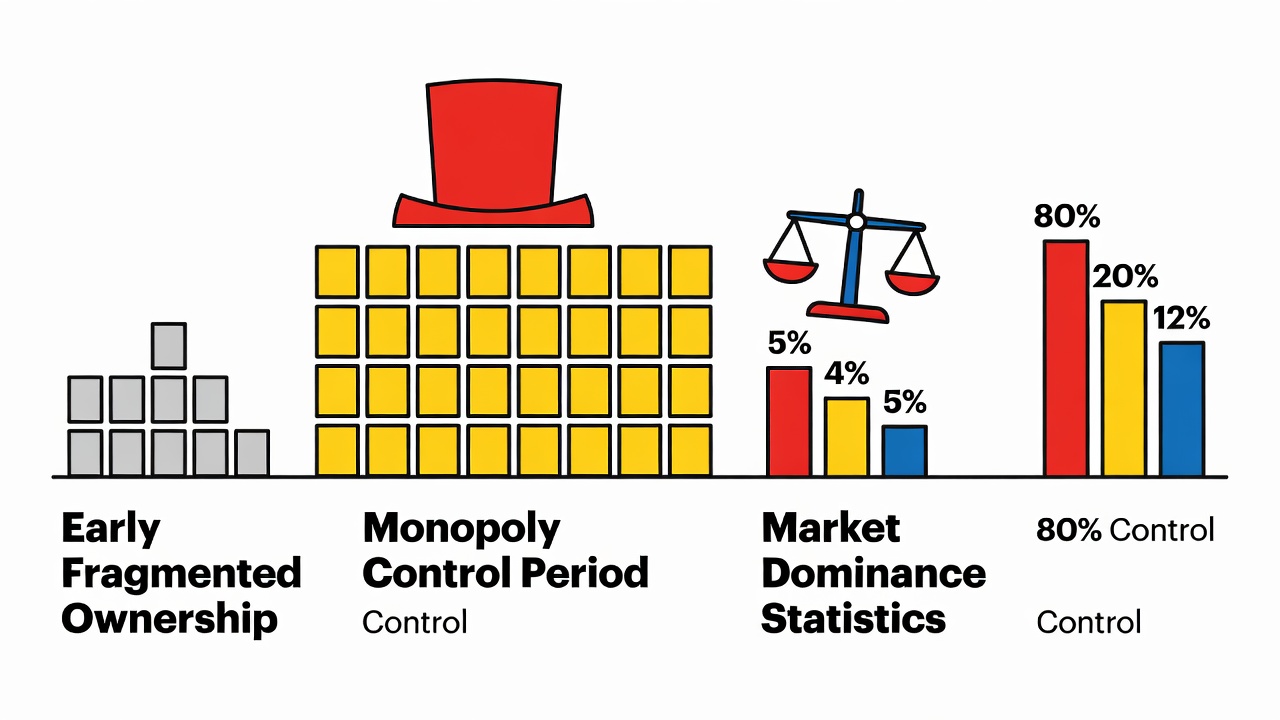
Ho's monopoly was absolute. Every casino in Macau held a license from Ho. Every gaming table, every slot machine, every wager placed was subject to Ho's oversight and Ho's financial interest. This was not competition; it was a single operator controlling an entire market.
In 1972, Ho opened the Lisboa Hotel and Casino, a landmark that defined Macau's skyline. The building featured 240 gaming tables and was among the largest casinos in the world at that time. The Lisboa became the symbolic center of Macau gambling.
Under Ho's management, Macau developed a specific character. The casinos catered primarily to Chinese businessmen from mainland China and Hong Kong, as well as regional tourists. The games offered were traditional games: baccarat, roulette, blackjack, and sic bo (Chinese dice game). The atmosphere was high-stakes, formality-governed, and ethnically Chinese in character.
Ho's personal business model relied on several mechanisms. First, he extracted a commission (the government levy) of 11.3 percent of all casino revenues. Second, he controlled the casino operating companies and collected their profits directly. Third, he benefited from increased property values in Macau as the territory's gambling reputation grew.
The Financial Dominance
By the 1980s, Macau had become the world's third-largest gambling market behind Las Vegas and Atlantic City. By the 1990s, revenues were approaching those of Las Vegas. Ho's personal net worth, derived from the monopoly, reached an estimated 10 billion dollars by 2000.
This wealth positioned Ho as a dominant figure in Hong Kong business and politics. He served on various government committees. He was a philanthropist. He was a statesman who moved between Hong Kong, Macau, and mainland China politics with ease that reflected his economic importance.
The Transition (1997-2002)
The handover of Hong Kong from British to Chinese sovereignty in 1997 changed the political calculations surrounding Macau. China's intentions for Macau were ambiguous. Would the new government maintain Ho's monopoly, or would it end it in favor of direct government control or competing operators?
In 2002, the Macau government announced that it would end Ho's monopoly and issue new gambling concessions to competing operators. Two licenses were granted to other groups, breaking Ho's forty-year control. His monopoly company, STDM (Sociedade de Turismo e Diversoes de Macau), retained a concession but faced direct competition for the first time.
The Market After Monopoly
The end of Ho's monopoly coincided with dramatic growth in Macau gambling. With competition, new casino operators (primarily American companies like MGM and Las Vegas Sands) entered the market. They built larger, more luxurious casinos. Revenues accelerated from approximately 2 billion dollars in 2002 to 45 billion dollars by 2013.
Ho's company remained profitable, but its market share declined from 100 percent to approximately 15-20 percent. The monopoly rent was gone. Ho stepped back from daily operations, ceding control to his children.
Historical Significance
Ho's monopoly was significant for several reasons. First, it demonstrated that gambling markets do not require competition to function. A single operator can manage a large market efficiently, setting rules that provide stability and reducing regulatory overhead.
Second, it showed how political access translates into economic monopoly. Ho's monopoly was not granted based on business efficiency alone; it was granted because Ho had cultivated relationships with Portuguese and Chinese governments. The concession was a political favor.
Third, it illustrated the power of geographic arbitrage. Macau was the only legal gambling jurisdiction accessible to Chinese citizens (until recently). Ho benefited from this geographic advantage regardless of competitive pressures. When that advantage eroded, the monopoly's value diminished.
Stanley Ho died in 2020 at the age of 98. His family retains significant gambling interests in Macau, but the monopoly era is definitively over. His legacy is the creation of Macau as a global gambling destination and the demonstration that a single operator can manage a gaming market at scale.