A random number generator is not a black box. It is a algorithm, and algorithms can be audited, tested, and verified. This is the foundation upon which regulated gambling rests.
When you spin a slot at Bet365 or place a live bet at Pinnacle, the outcome is determined by a random number generator. The RNG is a mathematical function that produces sequences of numbers with no discernible pattern. These numbers are then mapped to game outcomes. A number between zero and one million might produce a winning spin. A number between one million and two million might produce a loss. The mapping is predetermined. The RNG's output is not.
But how do we know the RNG is actually random? How do we know it has not been biased to favor the operator? This is where third-party auditing enters.
The Testing Process
Major independent laboratories, such as iTech Labs, Gaming Laboratories International (GLI), and TST (Technical Systems Testing), perform RNG audits. These companies are hired by regulators and operators. Their independence is crucial. If the testing firm were owned by the operator, the tests would be worthless.
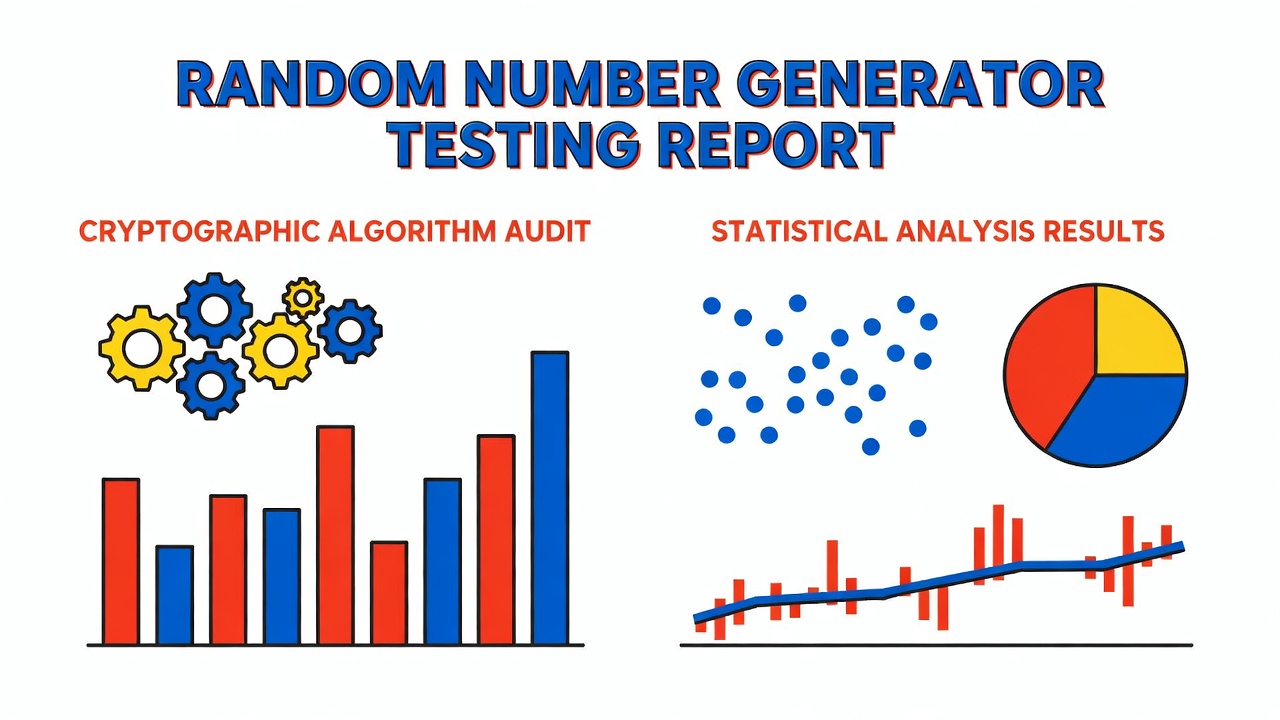
The audit process is technical. The testing firm requests the RNG source code. They examine it. They test it with known inputs to see if the outputs match theoretical probability distributions. They generate millions of samples and check them against statistical tests such as the chi-squared test and the Diehard test battery. These tests measure whether the output behaves like true randomness or whether patterns emerge.
If the RNG fails any test, the operator's certification is suspended. The machine cannot be deployed legally. The operator must fix the underlying algorithm and resubmit for testing.
This process takes months. It costs tens of thousands of pounds. This is why many rogue or lightly regulated operators cut corners. They do not fund independent testing because it is expensive and it might reveal problems.
Regulatory Requirements
Every jurisdiction with meaningful gambling regulation requires RNG certification. The United Kingdom Gambling Commission mandates that every licensed operator submit all games to independent testing before launch. The Malta Gaming Authority, which licenses some of Europe's largest operators, has similar requirements. Curaçao eGaming, whilst less stringent than the UKGC or MGA, still requires certification from approved testing firms.
The requirement isn't optional. It's a condition of licensure. Operators who fail to provide testing certificates are in breach of their license and can be shut down.
The United States, fragmented as it is, has state-level requirements. Nevada gaming regulators require RNG certification. New Jersey gaming regulators require it. Each state that has legalised online gambling has adopted similar provisions.
What Makes an RNG Trustworthy
Trustworthy RNGs typically use one of two approaches: cryptographic algorithms or hardware-based randomness.
Cryptographic RNGs derive randomness from mathematical functions that have been proven (through mathematical proofs, not testing alone) to produce unpredictable sequences given random seeds. An algorithm such as the ChaCha20 or a cryptographic hash function can serve this purpose. These are peer-reviewed by academic cryptographers before deployment.
Hardware RNGs draw randomness from physical phenomena. Thermal noise, atmospheric noise, or radioactive decay are sampled and converted to digital sequences. These sources are inherently unpredictable. No algorithm can replicate them or bias them without physical access to the hardware.
The strongest RNGs combine both. A hardware random source seeds a cryptographic algorithm. The result is auditable (because the algorithm is known) and unpredictable (because the seed is random).
Third-Party Verification
The testing firm generates seed values, feeds them into the RNG, and collects output. They then run statistical tests that would detect non-randomness. If the RNG is genuinely random, it will pass. If it has been biased, the tests will show patterns.
A biased RNG is nearly impossible to hide. The statistical tests used (such as NIST's Statistical Test Suite) are sensitive enough to detect bias as small as 0.1 percent. Over millions of samples, even tiny biases become visible.
This is why operators cannot easily cheat using software alone. The moment they introduce bias, the auditors' tests catch it. Yes, there are rogue operators who fake certificates or operate without testing. But any operator licensed by the UKGC, MGA, or other reputable regulator is required to show genuine testing results.
What Players Should Know
When you play at a licensed operator, the games have been tested. You cannot know the exact RNG algorithm (most operators keep this proprietary), but you can know that an independent firm has verified it is random within accepted statistical tolerances.
You cannot know if a specific spin will be a winner. That is the point. Randomness means no pattern, no history, no predictability.
You can know that the long-term payout percentage will match the published RTP. This is where the audit's importance becomes clear. The RTP is not arbitrary. It is calculated from the game design and the RNG output distribution. Auditors verify that the RNG's output distribution matches the claimed RTP.
If an operator claims their slot has a 96 percent RTP, the auditors test whether, over an infinite sample of RNG outputs, the game would indeed return 96 percent to players. If the test shows the game would return 93 percent, the certification fails.
RNG auditing is not perfect. No system is. But it is the closest thing gambling has to independent verification of fairness. Licensed operators submit to it. Rogue operators avoid it. This distinction matters when choosing where to play.