At a private baccarat room in Macau, a bettor and I sat across the table for eight hours. The house edge on baccarat is less than 1.5 percent. But our bettor had a different sort of advantage: a standing arrangement with the casino.
Cashback offers on live dealer games work the same way. They are negotiated discounts on the house edge. But the details matter enormously.
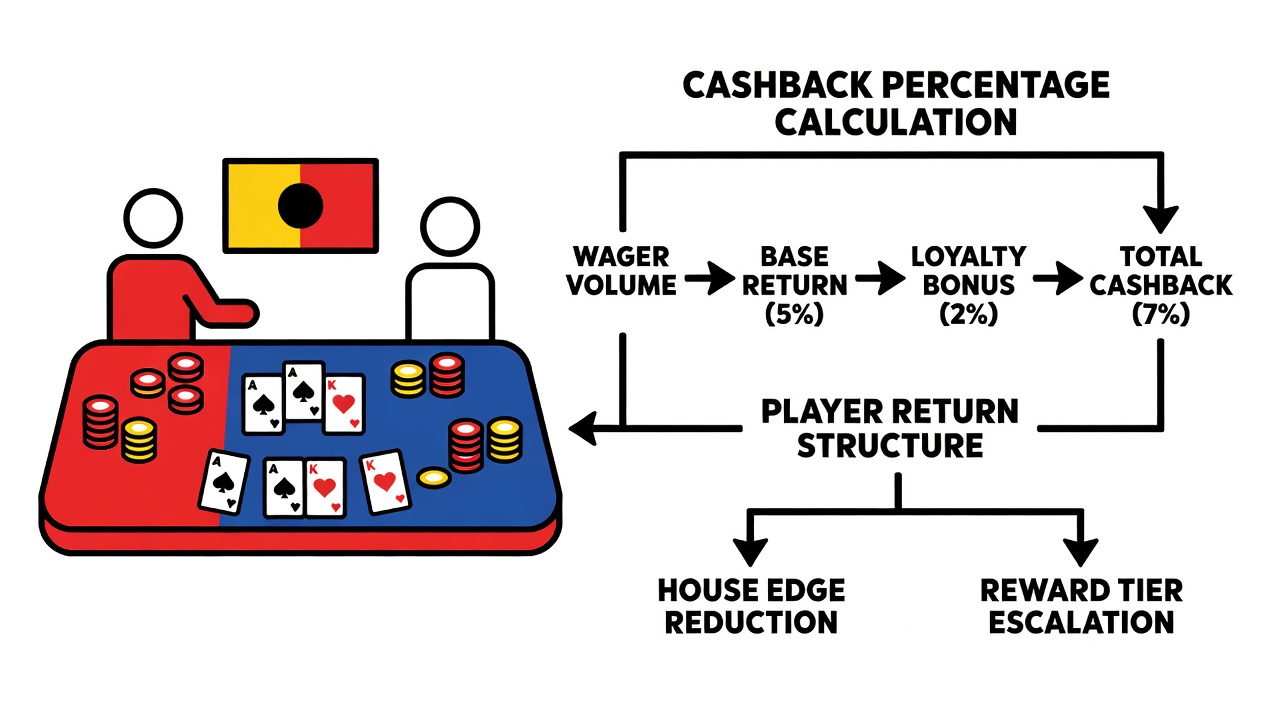
A typical cashback offer: lose more than 1,000 dollars in a month, receive five percent cashback on net losses. Sounds generous. You lose 2,000 dollars, you get 100 dollars back.
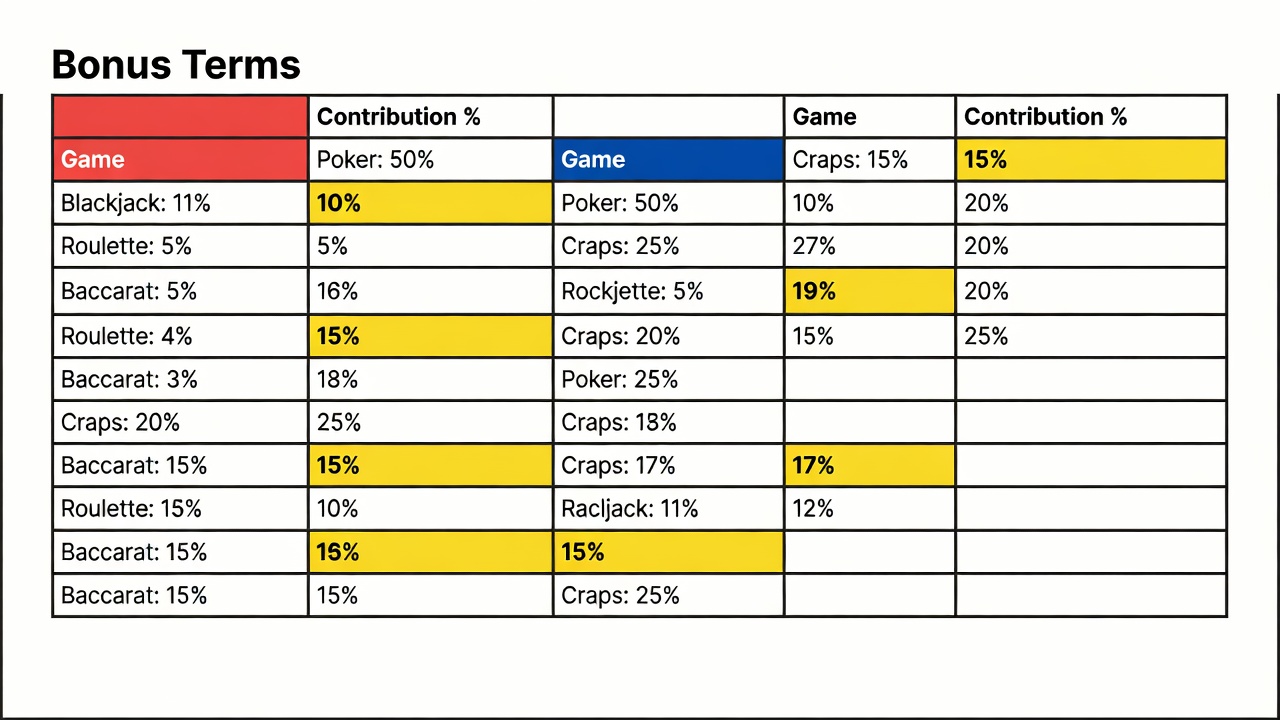
But cashback terms vary. Some require you to wager the cashback one time before withdrawal. Some lock the cashback into your account permanently (you can use it but cannot withdraw it). Some count losses from specific games only.
What to Check
First, verify that cashback applies to the games you actually play. Some offers exclude blackjack or limit cashback to specific variants. If you play blackjack but the cashback only applies to baccarat, the offer is worthless to you.
Second, examine the loss threshold. A five percent cashback on losses exceeding 1,000 dollars is different from five percent cashback on all losses. The first requires you to lose at least 1,000 before you receive anything. The second applies immediately.
Third, check whether cashback is calculated on gross losses (total money wagered minus winnings) or net losses (end balance minus starting balance). Gross loss calculations are more generous.
Fourth, verify the playthrough requirement. Cashback that requires ten times wagering before withdrawal is functionally identical to a slot bonus with a 10x requirement. Cashback with zero playthrough is genuinely withdrawable profit.
The Mathematics
Consider a player with a 10,000 dollar bankroll playing baccarat. The house edge is approximately 1.06 percent on banker bets. Expected loss: approximately 106 dollars.
With a five percent cashback offer (assuming cashback applies to all losses), the player's expected loss becomes: 106 dollars minus 5 percent of 106 (which is about 5.30 dollars) equals 100.70 dollars. The cashback reduces expected loss by 5.30 dollars.
This is real value, but it is marginal. Over a career of 100 sessions, the cashback advantage compounds to approximately 530 dollars. This is not trivial, but it is also not game-changing.
The Hidden Structure
Live dealer operators sometimes structure cashback offers so they appear generous but function as losses. A ten percent cashback that requires twenty times wagering is actually a bonus that extracts money rather than returning it.
When in doubt, calculate: assume a 500 dollar loss. Calculate your actual expected gain after accounting for the playthrough requirement and the house edge during playthrough.
If your expected gain is greater than 20 dollars, the offer is genuine. If it is less than 20 dollars, the operator is extracting more through the playthrough than they are returning in cashback.
At the Table
The best cashback offers come from operators who understand that retention matters more than extraction. These operators offer straightforward cashback with minimal playthrough requirements.
The worst offers come from operators trying to disguise bonuses as cashback. They attach complex restrictions, multiple tiers, and playthrough requirements that make the cashback worthless.
When evaluating an offer, ask: if I lose exactly 1,000 dollars this month, how much will I actually receive in withdrawable funds? If the answer is less than fifty dollars, the offer is poorly structured for you.
A high-limit player should demand cashback with zero playthrough. If an operator will not offer it, they are signaling that the offer is not genuine.