Cashback bonuses are a systems design pattern. From a game design perspective, they function identically to progression loops in video games.
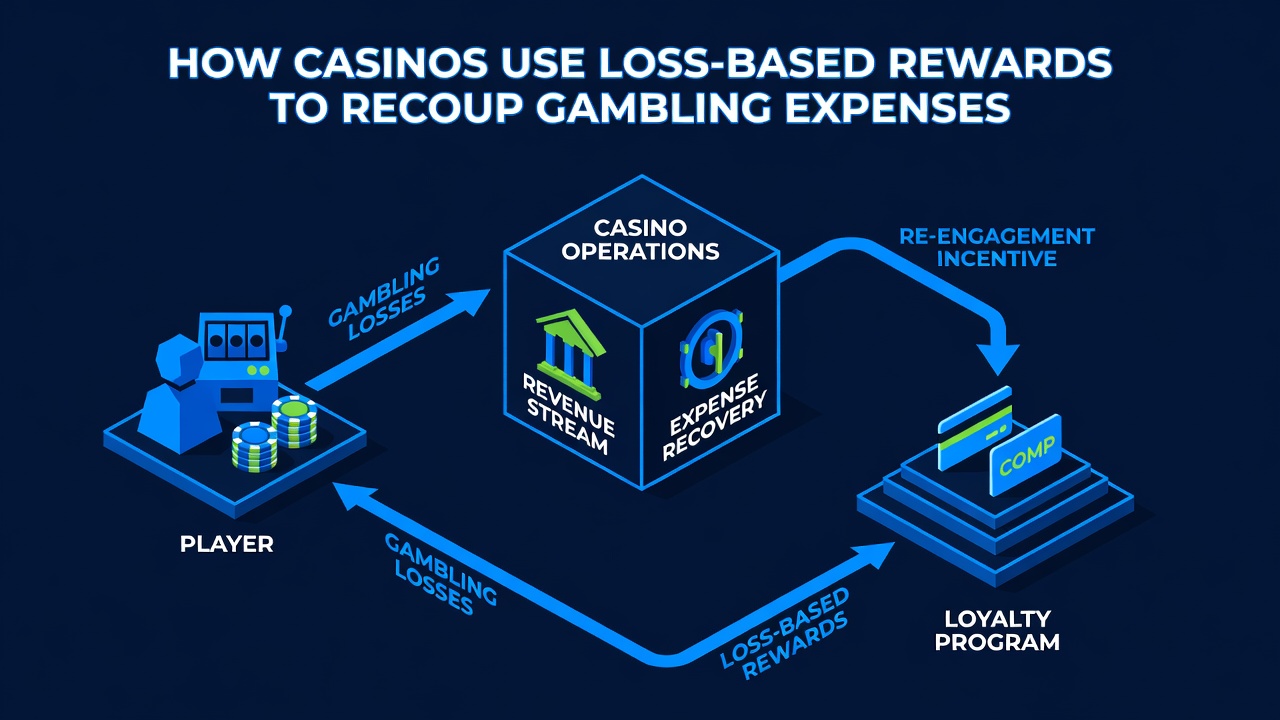
You place a wager. You lose money. You receive a small percentage rebate. That rebate (the reward) encourages you to place another wager. The next wager generates another loss and another rebate. The loop repeats.
In a video game, the loop might be: kill enemy, gain experience, advance level. Each advance encourages you to stay engaged. In a casino, the loop is: lose money, receive cashback, return to play.
The Mechanics
A cashback offer typically states: for every 100 dollars you lose this month, receive 5 dollars in cashback. You deposit 1,000 dollars and play.
During the month, you lose 2,000 dollars (expected value for average play at a casino). You receive 100 dollars in cashback. Your actual loss is 1,900 dollars.
From the casino perspective, they have accomplished something remarkable: they have reduced the effective house edge from 2 percent to 1.95 percent (they returned 5 percent of your losses, which compresses the house edge slightly), and they have committed you to repeated play.
Why Casinos Offer It
Casinos offer cashback because long-term customer value exceeds short-term margin. A customer who returns every month and loses 2,000 dollars repeatedly is worth far more than a one-time customer losing 2,000 dollars once.
Over twelve months, the repeat customer generates 24,000 dollars in losses. The one-time customer generates 2,000 dollars. The investment of 1,200 dollars in monthly cashback (5 percent of 2,000) is easily justified.
From an accounting perspective, the cashback is a customer acquisition and retention cost. It is not generosity; it is an expense categorized as marketing.
The Psychological Hook
Cashback feels different from a house edge. A house edge ("you will lose 2 percent on average") is abstract and depressing. Cashback ("you get 5 percent of your losses back") is concrete and encouraging.
The psychological framing matters. Instead of thinking "I lost 2,000 dollars," you think "I lost 2,000 but the casino refunded 100, so my actual loss was only 1,900." The rebate creates a sense of the casino sharing the pain.
It does not matter that you lost 1,900 dollars. You focus on the 100 dollar rebate as evidence of the casino's goodwill.
When Cashback Helps
Cashback reduces the effective house edge. If you were going to play anyway, accepting cashback makes mathematical sense.
Mathematically: without cashback, your expected loss is 2 percent of wagered money. With cashback, your expected loss is 1.95 percent. The difference compounds.
Over twelve months of 2,000 dollar monthly losses, cashback saves you approximately 120 dollars. This is a genuine benefit.
When Cashback Hurts
Cashback hurts when it induces increased play beyond your intended amount. If you planned to lose 2,000 dollars this month and cashback induces you to play 30 percent more, you now lose 2,600 dollars.
The 130 dollar cashback rebate seems generous until you realize you lost an extra 600 dollars to earn it. You have actually paid 470 dollars net for 130 dollars of rebate.
This is where the engagement loop becomes destructive. The reward (cashback) creates incentive for increased action (more play). The increased action generates losses that far exceed the reward value.
The Design Wisdom
Cashback is brilliant because it works on two levels. For disciplined players, it actually reduces costs. For undisciplined players, it creates engagement loops that generate outsized losses.
Casinos do not care which category you fall into. Either way, the casino wins.
Understanding the mechanism protects you. Accept cashback if you will play anyway. Avoid cashback if you think it will induce you to play more than planned.